

MD&A · 2025
In this section4 topics
Overview of Operations
Overview of Operations
Key Strategic Developments in FY2025
Amid a challenging global economic and geopolitical environment in 2025, the Company continued to execute its long-term strategic priorities, focusing on enhancing operational efficiency, strengthening market presence, optimizing group organization’s structure, and maintaining disciplined financial.
Strengthening European Market Presence
As part of its strategy to enhance control over sales execution and customer engagement in Europe, the Company completed a series of strategic initiatives to internalize its sales and distribution channels. Building on the acquisition of a UK-based sales office in late 2024, the Company successfully acquired 100% of the shares and voting rights of KCE Printed Circuit Boards GmbH in Germany in April 2025, with a total investment of Bt392.15 million (EUR 10.65 million)
With these acquisitions, the Company achieved full control over its sales and distribution operations in all European markets, enabling closer customer relationships, improved responsiveness to local market dynamics, and more consistent brand representation across the region. These strategic actions are intended to generate operational synergies, improve sales execution, and support revenue growth sustainability.
Group Restructuring and Streamlining of Operations
As part of its ongoing efforts to optimize group structure and enhance management efficiency, the Company implemented the merger of its subsidiaries Chemtronic Technology (Thailand) Co., Ltd. (CT) and Chemtronic Products Co., Ltd. (CTP). The restructuring aimed to streamline administrative functions and better support production capacity expansion at CTP.
The amalgamation was completed on 25 December 2025, with CT fully merged into CTP. As CT had not been in operation for several years, the merger aligned with the Company’s strategic direction to eliminate non-operating entities, divest non-profitable activities, and sharpen focus on core businesses. This internal restructuring under common control had no significant impact on the Company’s financial position or operations and did not constitute a connected transaction under applicable regulations.
Capital Investment Discipline and Factory Expansion Strategy
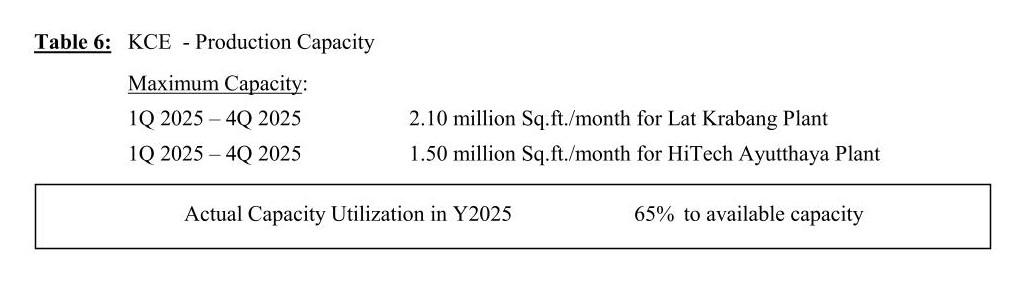
In response to ongoing global economic and geopolitical uncertainties, as well as market demand softness, the Company conducted a comprehensive review of its capital investment plans. During 2025, production facilities in Bangkok and Ayutthaya operated at below 70% of total capacity, prompting management to postpone the construction of a new factory.
Instead, the Company prioritized optimizing existing facilities through targeted investments in advanced machinery, automation, and process improvements. Extensive machinery testing and evaluation at current sites provided valuable technical insights, leading to a reassessment of equipment specifications and production line layouts originally planned for the new factory. These refinements are expected to reduce overall investment costs and improve capital efficiency when the expansion project resumes in the future.
The shift toward higher automation improved production efficiency and enhanced the Company’s ability to support more complex and technologically advanced product requirements. This disciplined approach reflects management’s focus on cost control, efficient capital allocation, and financial stability, while preserving flexibility to proceed with capacity expansion once market demand shows a clearer and stronger recovery.
Strategic Outlook and Capability Development
Looking ahead, the Company recognizes that the electronics and PCB market continues to evolve rapidly, driven by increasing product complexity, shorter innovation cycles, and higher customer expectations. To remain competitive, the Company is committed to advancing technology development and launching new strategic initiatives, including greater application of automation, data analytics, artificial intelligence (AI), and research and development (R&D) across its operations.
In 2025, the Company made significant progress in upskilling its workforce, particularly through hands-on learning associated with new machinery installation and advanced production processes. As product requirements become increasingly complex, management anticipates that future development will involve more advanced learning programs, more challenging technical cases, and deeper cross-functional expertise, driven by the sophisticated needs of customers. At the same time, energy consumption reduction has become a core consideration across all projects. The Company has embedded energy efficiency and environmental responsibility into its operational planning, recognizing that environmentally friendly manufacturing practices are no longer optional but an essential component of long-term sustainability. These initiatives align with the Company’s broader ESG commitments and support both cost efficiency and responsible growth.
Overall, 2025 represented a year of strategic consolidation, capability building, and disciplined execution. The Company strengthened its market platform in Europe, streamlined its group structure, exercised prudent capital investment discipline, and laid the groundwork for future growth through technology, people, and sustainability initiatives. These actions position the Company to respond effectively to evolving market conditions while creating long-term value for shareholders and stakeholders.
Operating Results & Financial Condition
Operating Results & Profitability
FY2025 Operating Result
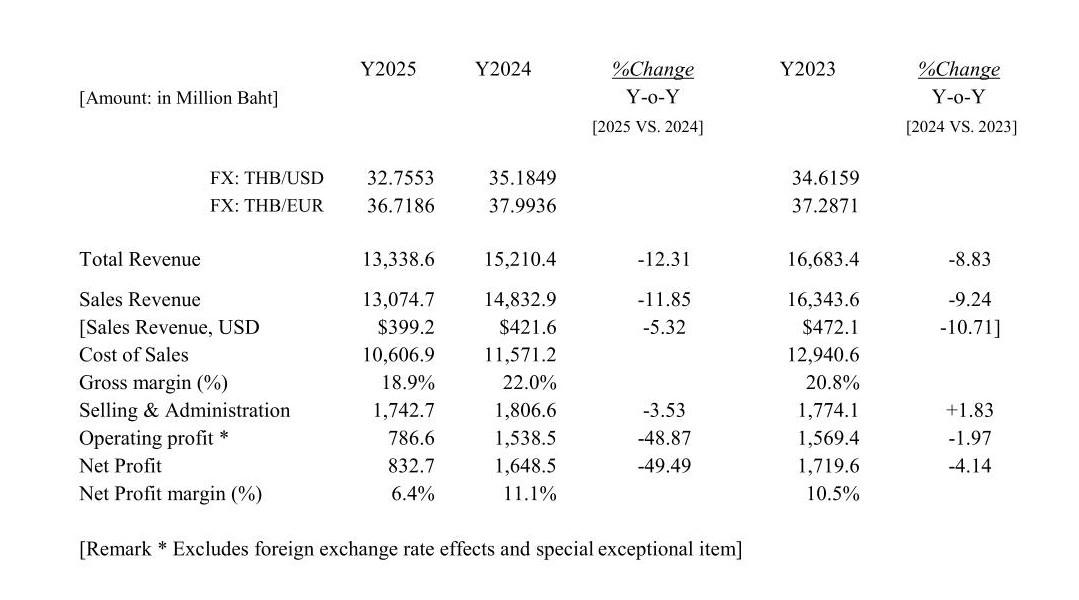
Based on audited consolidated financial statement ended on 31st December 2025, KCE Electronics PCL and its subsidiaries reported fiscal year 2025 group’s total revenue at Bt13,338.6 million, with Bt832.7 million net profit (6.4% of sales), compared to 2024’s performance showing Bt15,210.4 million of total sales with Bt1,648.5 million net profit (11.1% of sales). The comparison of operating performance between FY25 vs FY24 is shown in the following table:
Operating performance
Total Revenue
The total consolidated revenue of FY25 was reported at Bt13,338.6 million, decreasing 12.3% Y-o-Y. This total revenue includes Bt13,074.7 million from product sales and Bt263.9 million from other income. In FY25, the company’s other income decreased Bt113.7 million from FY24, primarily driven by gains from old subsidiary factory sold in Y2024 as a one time.
In summary, other income consists of the following key items:
[Amount: in Million Baht] | FY25 | FY24 | FY23 |
Profit from sale of assets | 0 | 119.9 | 0 |
Profit from exchange rates | 48.1 | 56.9 | 153.4 |
Other income | 215.8 | 200.8 | 186.3 |
Total other income | 263.9 | 377.6 | 339.7 |
Sales Revenue
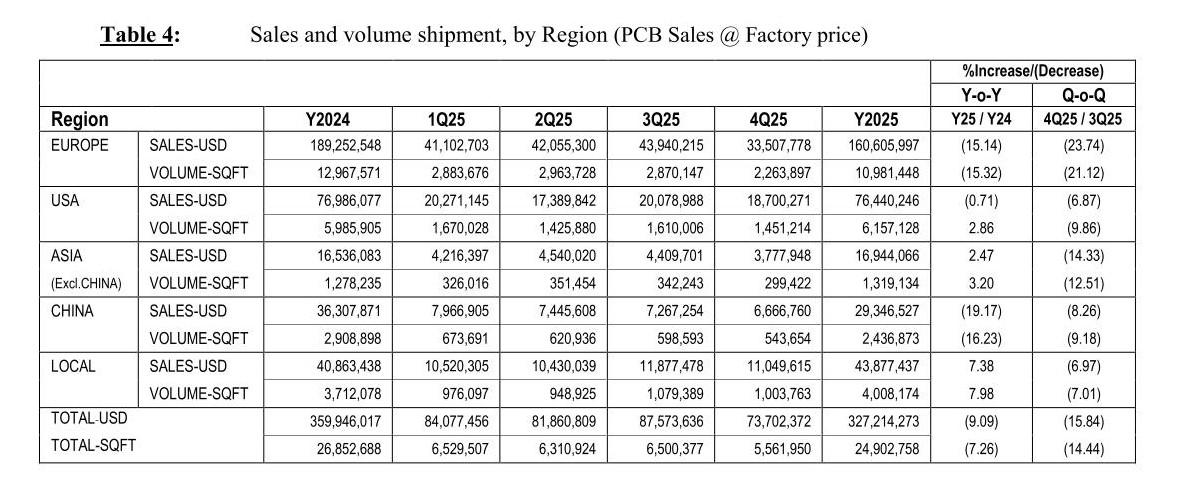
In fiscal year 2025, the Group reported consolidated sales revenue of Bt13,074.7 million, a decrease from Bt14,832.9 million in FY24, representing a decline of 11.85% Y-o-Y. In U.S. dollar terms, consolidated sales revenue declined by a 5.32% Y-o-Y, from USD 421.6 million in FY24 to USD 399.2 million in FY25.
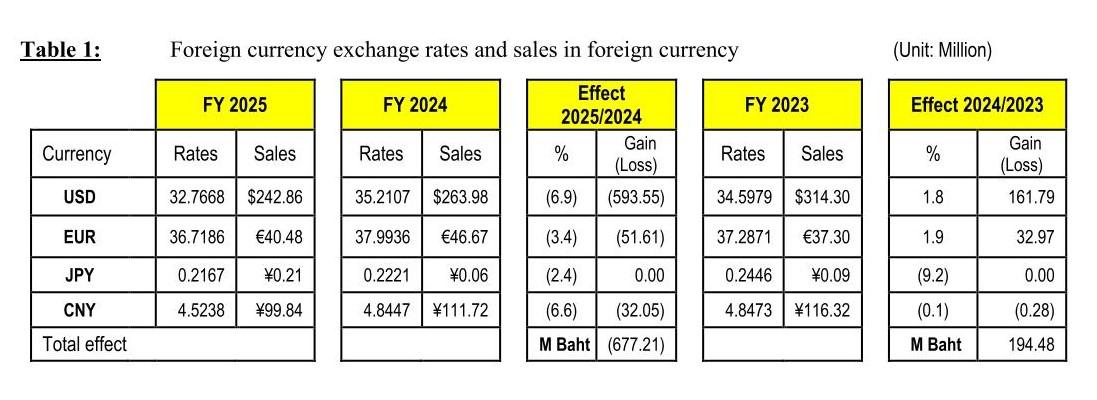
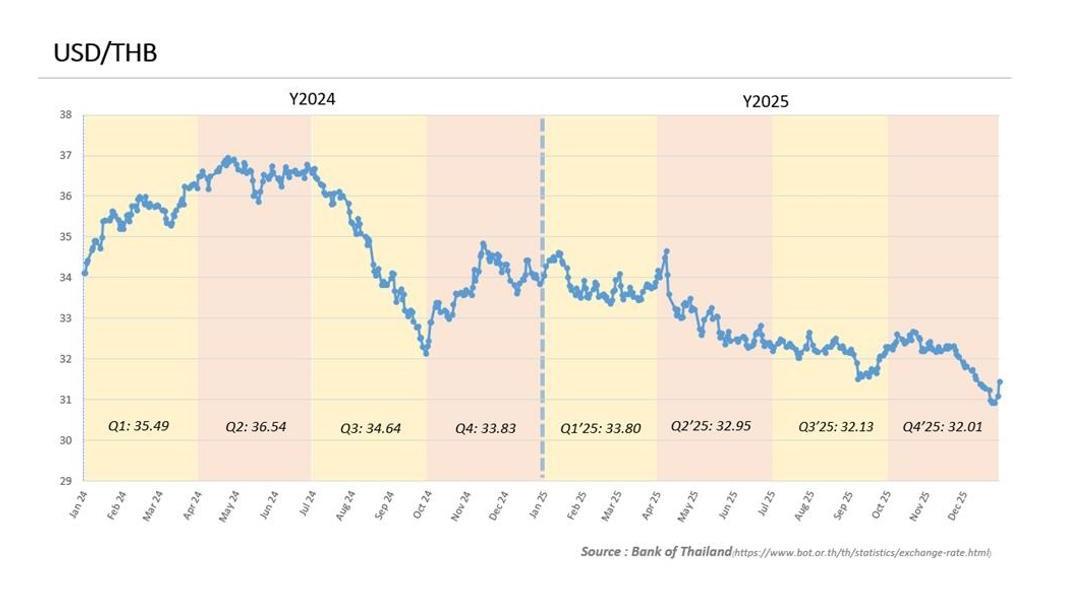
The larger declined in revenue when reported in Thai Baht was primarily attributable to the appreciation of the Thai Baht against the U.S. dollar during the year, which negatively affected revenue translation. The strengthening of the Baht reduced revenue recognition by approximately Bt677.2 million compared to FY24, and was a key factor contributing to the year-on-year decline in reported sales revenue in Baht terms (Table 1).
FY25 was a challenging year for the electronics industry overall, as global market demand remained subdued, particularly in the automotive segment, which continues to be the Company’s principal end market. The slowdown in automotive production and demand directly impacted customer's orders, resulting in a 7.26% Y-o-Y decline in total PCB sales volume.
In addition to market-related factors, FY25 marked an important transition year in terms of technology and production capability development. The Company continued to adopt and install new-generation machinery and advanced production technologies as part of its long-term strategy to upgrade production lines and support increasingly complex customer requirements, particularly for high-density interconnect (HDI) PCBs, which represent a key growth focus for the Company.
During the year, extensive machinery testing, evaluation, and learning processes were required to ensure stable operations, committed product quality, and process efficiency. These activities, while essential for long-term competitiveness, temporarily slowed certain production lines and resulted in lower output at various periods during the year.
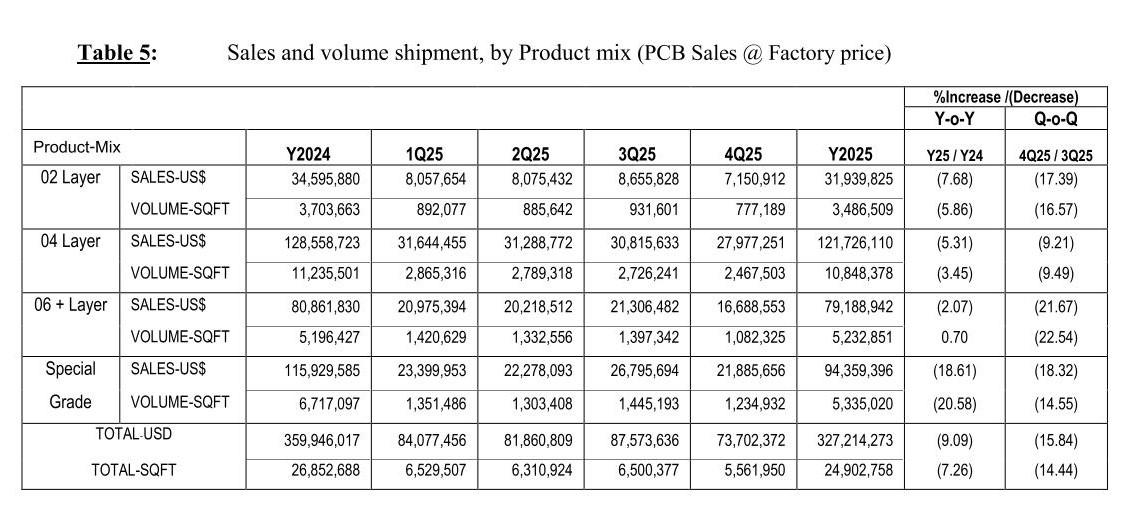
As a result of these capacity and ramp-up constraints, the Company was not able to fully convert strong HDI demand into sales during FY25. At the end of the year, the Company recorded HDI backlog orders of approximately USD 8.5 million, out of total backlog orders of around USD 10.0 million, which are expected to be delivered and recognized primarily in the first half of FY26. The capacity limitations during the transition period also contributed to a year-on-year decline in HDI sales volume of 18.6%, compared to the prior year. HDI products involve higher complexity and tighter process control requirements, necessitating additional development and stabilization time for manufacturing processes.
With regard to pricing, the Company continued to face intensified competitive pressure throughout the year. While total PCB sales volume declined by 7.26% Y-o-Y, total sales revenue decreased by 9.09%, reflecting the impact of price reductions across the market. Industry-wide oversupply conditions led customers to increase pricing pressure and request annual price reductions throughout the supply chain, further weighing on revenue performance.
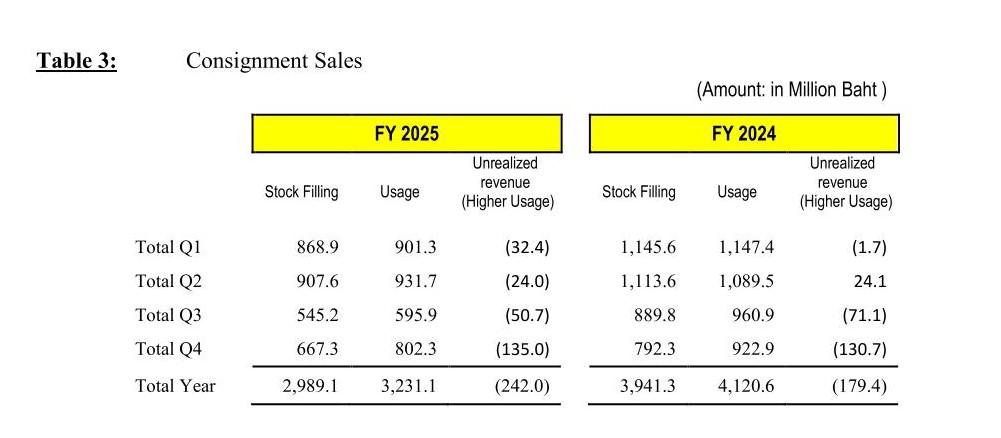
Another factor impacting sales was a one-time adjustment due to the acquisition of a sales distribution company in Germany. As this entity transitioned into a subsidiary, the company had to adjust revenue back to be inventory for shipments to the Germany sales office, which had not yet been sold to end customers. This adjustment reduced recognized revenue by Bt225.9 million in FY25, but this amount will be recognized as revenue in the next period.
Overall, the decline in FY25 sales revenue was driven by a combination of currency translation effects, weaker market demand, particularly in the automotive segment, temporary production constraints associated with technology upgrades, and pricing pressure form competition. Management views the investments made during FY25 in advanced machinery, process capability, and HDI production readiness as critical foundations for supporting future growth and improving the Company’s ability to capture demand as market conditions recover.
Cost of Sales and Gross Profit
In FY25, the Company faced notable cost challenges primarily driven by a significant decline in sales volumes, which directly impacted production line utilization. The average production capacity utilization rate decreased to approximately 65% in FY25, compared to 71% in FY24. This lower utilization level resulted in a higher burden of fixed manufacturing overheads, including depreciation, machinery and facility repair and maintenance expenses, as well as employee costs related to operational support. As a result, cost control and operational efficiency became key management priorities throughout the year.
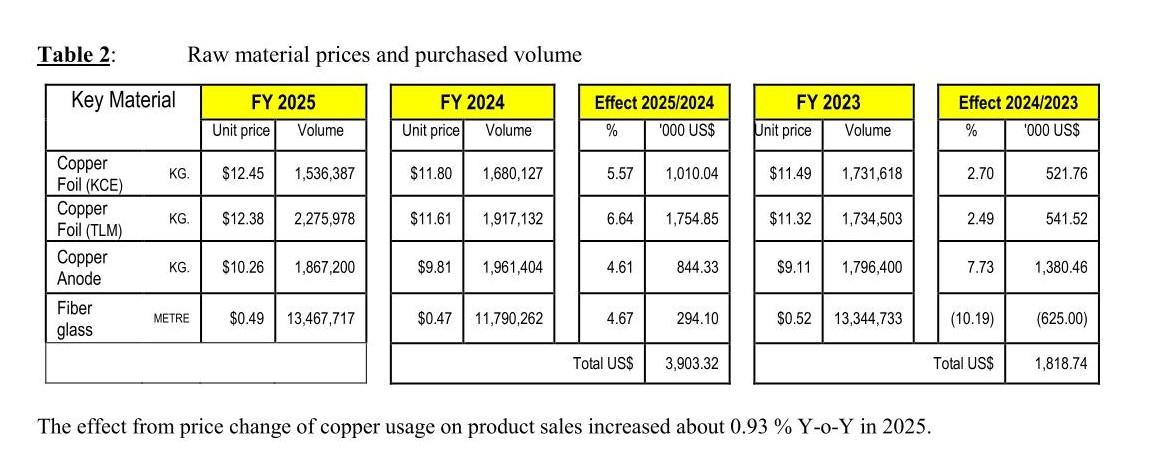
In addition to lower utilization rates, raw material costs continued to exert pressure on overall cost performance. Copper, which represents the principal raw material in PCB manufacturing, experienced price increases during the year, leading to an increase in copper-related production costs of approximately 0.93% of sales on a year-on-year basis (Table 2). These cost pressures were further intensified by the highly competitive market environment, driven by global PCB oversupply, which limited the Company’s ability to fully pass on higher costs to customers amid continued pricing pressure.
Furthermore, the Company’s product mix continued to shift toward more complex and technologically advanced PCB products, particularly high-density interconnect (HDI) PCBs, which require more sophisticated manufacturing processes, advanced testing capabilities, and tighter process controls. While these products support the Company’s long-term strategic positioning, they also contributed to higher production complexity and cost sensitivity, especially under conditions of lower machinery utilization.
In response to these challenges, the Company implemented comprehensive cost reduction and efficiency improvement initiatives across its operations. Key measures included the integration of advanced production technologies to enhance automation, reduce manpower requirements, and improve process stability; initiatives to reduce power consumption through more efficient equipment and optimized operations; and efforts to lower chemical and consumable costs through process optimization and supplier rationalization.
Despite ongoing market pressures, these cost management initiatives helped partially offset the impact of lower volumes and higher material costs. As a result, the Company reported a gross profit margin of approximately 18.9% in FY25, compared to 22.0% in FY24. Management remains focused on further strengthening cost competitiveness and operational efficiency, viewing these initiatives as critical to sustaining profitability and supporting long-term growth as market conditions improve.
Sales and Administrative Expenses
In FY25, selling, general and administrative expenses totaled Bt1,742.7 million, representing 13.33% of sales, a decrease from FY24, when expenses were Bt1,806.6 million, or 12.18% of sales
Selling expenses in FY25 amounted to Bt348.5 million, representing 2.67% of sales, compared to Bt458.3 million, or 3.09% of sales, in FY24. The Y-o-Y decrease was primarily attributable to lower freight and shipping costs, in line with the overall decline in sales volume.
In addition, following the acquisition of the UK and Germany sales offices as subsidiaries, intercompany sales commission expenses of Bt112.2 million in FY25 were eliminated in the consolidated financial statements, compared with higher commission expenses of Bt136.4 million in FY24, which had previously been recorded as external payments. Under the new operating structure, selling staff costs and other selling-related expenses totaling approximately Bt74.4 million for the UK and Germany operations were included in the Group’s selling expenses in FY25, replacing commission-based payments. This structural shift, together with lower sales-related costs overall, contributed to the reduction in selling expenses compared with the prior year.
Administrative expenses in FY25 totaled Bt1,394.2 million, representing 10.66% of sales, an increase from Bt1,348.3 million or 9.09% of sales in FY24
Administrative expenses increased Y-o-Y, primarily due to the consolidation of newly acquired subsidiaries in the UK and Germany, which resulted in additional administrative costs totaling Bt75.6 million. These costs represent normal ongoing expenses of the acquired entities following the completion of the acquisitions.
The increase was further driven by the recognition of amortization of customer relationship assets under purchase price allocation (PPA) accounting, amounting to Bt59.5 million in FY25. This amortization is a non-cash expense arising from the acquisition and will continue over the useful life of the assets.
In addition, the Company incurred a one-time legal service fee of Bt10.7 million related to advisory and transaction support services during the acquisition process.
Furthermore, an increase in bad debt reserves of Bt13.6 million was recognized following a review of the financial condition of certain customers.
These increases were partially offset by a reduction in losses on asset disposals and asset impairment provisions of Bt67.1 million, as well as a decrease of approximately Bt34.0 million in employee costs, insurance premiums, and utility expenses, resulting from various cost optimization initiatives, including workforce reductions and other expense control measures.
Net Profit
As a result of lower revenue as per mention above, the Group reported a consolidated net profit of Bt832.7 million in FY25, which represented a significant decrease of 49.5% Y-o-Y. Operating profit in FY25 totaled Bt786.6 million (excluding a gain on foreign currency exchange rate of Bt48.1 million and net loss on asset sold and impairment amount Bt2.0 million), representing a decrease of 48.9% Y-o-Y. This resulted in basic earnings per share of Bt0.70 compared to Bt1.39 per share in FY24.
Total Assets
Total assets as of December 31, 2025, amounted to Bt17,929.6 million, consisting of current assets Bt8,577.0 million and non-current assets Bt9,352.6 million that consisting of property plant and equipment of Bt7,267.2 million, net intangible assets of Bt874.7 million, contract costs assets of Bt316.6 million, investment property of Bt148.9 million, goodwill of Bt484.1 million, investments in associates of Bt28.0 million, deferred tax assets of Bt114.0 million and other non-current assets of Bt119.0 million.
In FY25, total assets decreased by Bt486.1 million, primarily due to the following factors:
Trade and other receivables decreased by Bt816.8 million, mainly because accounts receivable of Bt464.6 million related to KCE Germany, which had been included in 2024, were no longer presented as external receivables following the acquisition of the German entity as a subsidiary in FY25.
The decrease also reflected lower overall sales volumes and the impact of the appreciation of the Thai Baht. In addition, a doubtful debt allowance of Bt13.6 million was recorded during the year as part of a prudent review to cover potential credit risks.
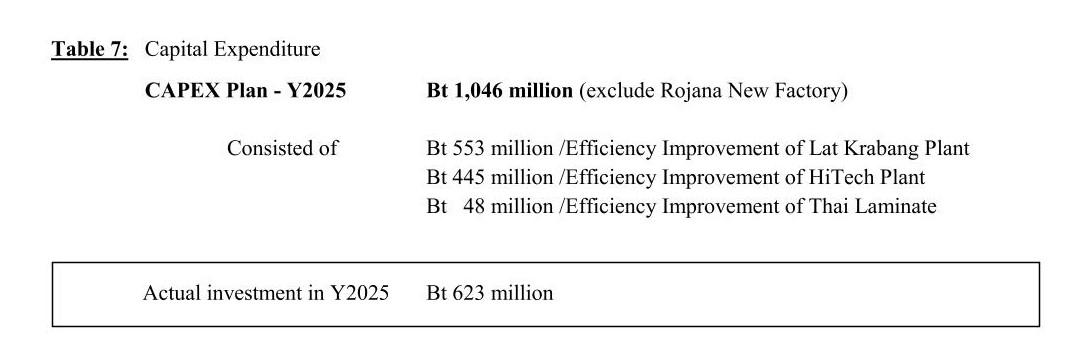
Net property, plant, and equipment (PP&E) declined by Bt378.1 million, as depreciation expenses exceeded capital expenditures, despite CAPEX totaling Bt623.0 million during the year. The Company continued to carefully evaluate investments in new machinery and equipment aimed at enhancing production efficiency and long-term competitiveness.
Cash and cash equivalents increased by Bt403.1 million, reflecting effective working capital management and the accumulation of funds in preparation for future machinery purchases.
Goodwill increased by Bt33.8 million, including Bt38.0 million arising from the acquisition of the German subsidiary.
Intangible assets increased by Bt243.2 million, mainly due to the recognition of customer relationship assets in Germany amounting to Bt320.9 million, net of amortization of Bt67.0 million recorded during the year following the acquisition.
Total Liabilities
Total liabilities increased by Bt135.8 million, from Bt4,597.6 million at the end of 2024 to Bt4,733.4 million as of December 31, 2025, primarily due to the following factors:
An increase in short-term and long-term interest-bearing debt of Bt320.0 million, mainly to finance additional purchases of machinery and equipment aimed at enhancing production capability and efficiency.
A decrease in trade and other current payables of Bt290.1 million, largely attributable to the settlement of other payables related to share purchase obligations amounting to Bt170.9 million, which were outstanding at the end of 2024 and fully paid during 2025, as well as scheduled payments for machinery and equipment purchases.
An increase in deferred tax liabilities of Bt72.2 million, arising from the acquisition of the German subsidiary, primarily related to the amortization of customer relationship intangible assets.
An increase in provisions for employee benefits of Bt46.9 million, reflecting updated actuarial valuations at year-end, including Bt26.3 million related to the newly acquired sales office in Germany.
As of December 31, 2025, the Group’s net interest-bearing debt to equity ratio stood at 0.11 times, compared to 0.08 times as of December 31, 2024. Despite the year-on-year increase, the ratio remains at a low and conservative level, reflecting the Company’s prudent financial management and disciplined approach to capital investment. Management continues to carefully evaluate investment opportunities and maintain close control over funding sources, with a focus on preserving a strong balance sheet and financial flexibility to support both operational needs and long-term growth.
Shareholders' Equity
Total shareholders’ equity as of December 31, 2025, according to the KCE consolidated financial statement amounted to Bt13,196.2 million, decreased Bt621.9 million from December 31, 2024 due mainly to operating profit of the year amounted Bt825.0 million, net with dividend payment of Bt1,446.9 million.
Analysis of performance
Debt Securities with Financial Ratio Requirements
Debt Securities with Financial Ratio Requirements Issued?
No
Factors That May Affect Financial Condition
Factors or Incidents That May Materially Affect Financial Condition
Key Factors in 2025
During 2025, the Company operated in an environment characterized by heightened external uncertainties. Three key areas of focus for management were developments in U.S. trade policy, foreign exchange volatility and price volatility of key raw materials which have the potential to affect export-oriented businesses.
U.S. Tariff Environment and Market Management
Throughout 2025, the Company actively monitored developments related to U.S. import tariff policies and their potential impact on export revenue. Sales to the north Americas region accounted for approximately 23% of total revenue, of which around 16% was derived from customers in the United States, with the remainder from other countries in the region.
Despite ongoing trade policy uncertainties, the Company did not experience any direct negative impact from U.S. tariff changes in terms of order volume or pricing pressure from U.S. customers during the year. Printed circuit boards remain a critical component in electronic manufacturing, and the Company’s consistent product quality, delivery reliability, and technical support continue to be regarded by customers as an essential part of their supply chains.
At the same time, the evolving geopolitical landscape and the increasing preference for non-China sourcing have created both opportunities and challenges for the Company as a Thailand-based manufacturer. During 2025, the Company observed growing interest from new potential U.S. customers, including requests for plant visits, operational evaluations, product sampling, and price quotations. These inquiries were partly driven by customers’ efforts to diversify supply chains and reduce geopolitical risk.
In response, the Company initiated product sampling, current process evaluations, and commercial discussions for selected non-automotive applications, in line with its strategy to expand into non-automotive segments while maintaining its core strength in automotive PCB markets. Management views this development as a long-term opportunity to broaden the customer base and enhance resilience, while recognizing the need to carefully manage capacity, cost competitiveness, and quality expectations.
Throughout the year, the management maintained close and proactive communication with customers to monitor potential changes in demand, pricing expectations, and sourcing strategies, enabling the Company to respond in a timely and informed manner to any developments related to U.S. trade policy.
Foreign Exchange (FX) Impact
Foreign exchange volatility was another significant concern during 2025. As nearly 100% of the Company’s revenue is derived from export sales or priced in U.S. dollars, movements in the Thai Baht have a material impact on the Company’s reported financial performance.
During the year, the Thai Baht continued to strengthen against the U.S. dollar, which adversely affected revenue and profitability when translated into Baht terms. This impact was further compounded by a decline in sales volumes in U.S. dollar terms, primarily due to market softness in the automotive segment, which remains the Company’s principal end market. The slowdown in global automotive demand led to lower order volumes from customers, particularly in the second half of the year.
As a result, the combined effect of lower sales volume in foreign currency and currency appreciation weighed on reported revenue, margins, and year-on-year comparability of financial results. While exchange rate movements are beyond the Company’s control, management remained focused on mitigating their impact through strict cost control and operational efficiency initiatives.
Throughout 2025, the Company implemented tightened cost management measures, including optimization of labor costs, improved production efficiency through automation, careful control of overhead expenses, and disciplined capital expenditure. These actions played a critical role in offsetting part of the adverse FX impact and supporting profitability despite challenging market and currency conditions.
In addition, the Company continued to closely monitor foreign exchange exposure and align its cost structure with revenue currency profiles, with the objective of enhancing resilience against ongoing exchange rate volatility.
Key Material Prices Impact
Another key concern for the Company in 2025 relates to raw material price movements, particularly copper, which is a critical input in PCB manufacturing. Copper is a core component of key raw materials used by the Company, including copper anode, copper foil, and copper clad laminate (CCL). As such, changes in copper prices have a direct impact on production costs and gross margin.
According to London Metal Exchange (LME) monthly average settlement prices, copper prices in 2025 showed a clear upward trend compared with both 2024 and 2023, with prices remaining at elevated levels throughout the year and peaking during the mid-year period.
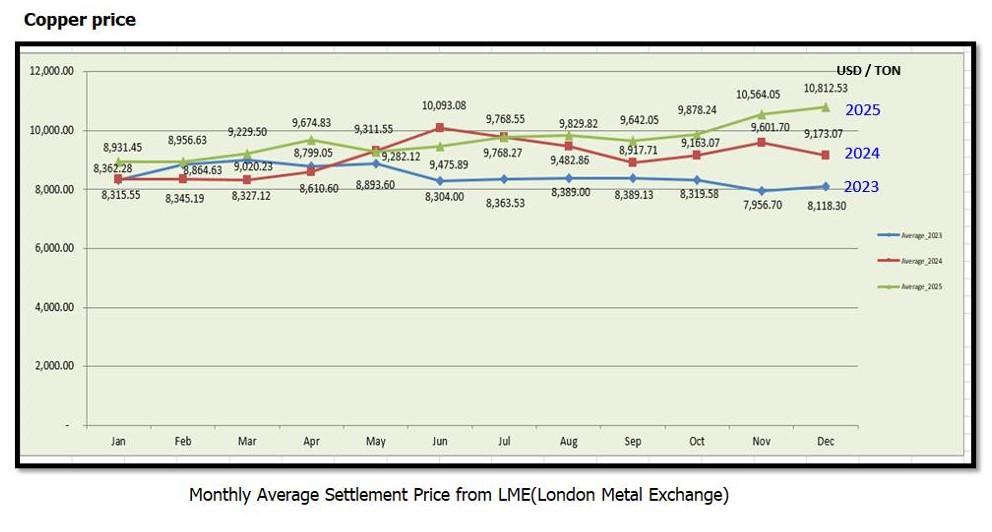
This increase contributed to higher raw material costs and added pressure to the Company’s cost structure during FY2025.
Given the highly competitive global PCB market environment and continued pricing pressure from customers, the Company’s ability to fully pass through higher copper costs was limited. As a result, copper price increases had a direct impact on the cost of sales for the year.
In response, the Company continued to closely monitor copper price movements in the global market and actively manage related operational factors. Key mitigation measures included production planning, procurement timing, inventory level management, and raw material usage control, with the objective of balancing cost efficiency and supply security. In addition, the Company focused on process improvements to reduce material loss and damage, particularly in high-technology products such as HDI PCBs, where effective copper utilization is critical.
While copper prices are influenced by global economic conditions beyond the Company’s control, management remains focused on mitigating cost volatility through disciplined operational management, continuous process improvement, and prudent inventory planning, in order to maintain product quality and operational stability.