

Business Operation · 2025
In this section24 topics
- Corporate Information4 items
- Dividend Policy2 items
- Major Shareholders2 items
- Business Strategies Overview6 items
- Material Changes & Developments1 item
- Use of Proceeds from Securities Offerings1 item
- Commitments Made in the Registration Statement1 item
- Group Operating-Structure Policy1 item
- Companies Where the Company Holds ≥10%1 item
- Shareholders with Potential Conflict of Interest1 item
- Relationships Among Major Shareholders1 item
- Shareholders' Agreement1 item
- Shareholding Diagram (Group Structure)4 items
- Income Structure4 items
- Product / Service Characteristics2 items
- Research & Development7 items
- Assets Used in the Business6 items
- Marketing Policy & Competition3 items
- Procurement of Products & Services7 items
- Nature of Business — Overview1 item
- Projects Under Construction1 item
- Issuance of Other Securities1 item
- Debentures & Bills of Exchange1 item
- Convertible Securities1 item
Corporate Information
Company Name
KCE ELECTRONICS PUBLIC COMPANY LIMITED
Telephone
0-2326-0196-9
Website
www.kce.co.th
information@kce.co.th
Dividend Policy
Dividend Policy
According to the Company’s Articles of Association, the Company must appropriate its annual net profit for legal reserve of not less than 5 (five) percent of annual net profit after a deduction of brought forward deficit (if any) until the reserve shall be not less than 10 (ten) percent of the Company’s registered capital.
The Company’s policy is to pay a dividend of not less than 30% of its consolidated net profit for the fiscal year, after deducting for tax and reserves as required by the law. The dividend is paid twice a year via i) an interim dividend payment, which is based on the operating results of the first half of the year, and must be approved by the Board and reported to the upcoming Shareholders' Meeting; and ii) the annual dividend payment, which is considered from the operating results of the second half of the year. Again, the Board must seek approval from shareholders.
As for subsidiaries' dividend payments, each unit must take into account its own financial status and other important factors before determining an appropriate amount.
In all cases, the dividend payment is subject to cash flow, investment plans, other necessities and expected future requirements. Furthermore, such the dividend payments must not exceed retained earnings, as reported in the Company's financial statement, and/or have any substantial impact on the operations of the Company and its subsidiaries.
Historical Dividend Payments
| This Year | Last Year | 2 Years Ago | 3 Years Ago | 4 Years Ago | Metric | Description | Remark |
|---|---|---|---|---|---|---|---|
| 0.7 | 1.39 | 1.45 | 1.96 | 2.06 | Net profit per share (Baht : Share) | Net profit per share (baht : share) | |
| 1.2 | 1.2 | 1.3 | 1.6 | 1.6 | Dividend per share (Baht : Share) | Dividend per share (baht : share) | *The proposed dividend in the 2026 Annual Shareholders' Meeting |
| 0 | 0 | 0 | 0 | 0 | Dividend stock ratio (Number of original shares: dividend shares) | Ratio of stock dividend payment (existing share : stock dividend) | |
| 0 | 0 | 0 | 0 | 0 | Dividend share value per share (Baht : Share) | Value of stock dividend per share (baht : share) | |
| 1.2 | 1.2 | 1.3 | 1.6 | 1.6 | Total dividend payment value (Baht : Share) | Total dividend payment (baht : share) | |
| 170.4 | 86.1 | 89.4 | 81.6 | 77.9 | Dividend payout ratio to net profit (%) | Dividend payout ratio compared to net profit (%) |
Business Strategies Overview
Introduction
The Board joined with management in establishing the Company’s vision, mission, strategies, goals and business direction, in aiming that management and employee focus on the same direction. In the recent year, the Board has reviewed and approved the Company’s vision and the business direction, in addition, monitored management performance accordingly.
Chairman's Message
Vision
KCE is an industry leader in providing both the products and services that are critically important to its customers’ success. KCE is dedicated to meet and exceed not only today’s strategic requirements but tomorrow’s as well, with good governance, social and environmental responsibilities.
Mission
To provide both quality products and exceptional services to our customers
Dedication to its responsibilities to all stakeholders in a professional manner
To achieve excellence by continuously improvement
Protecting the environment and being a carbon neutral organization
To be a responsible and contributing member of society based on good governance principle.
To continually train and develop staff to a high level of competence
Objectives
The Company is committed to sustainable organizational growth through the development of technology, the production of high-quality products and services, and the continuous development of its personnel. It also places strong emphasis on stakeholder responsibility, conducting business in accordance with principles of good corporate governance and the Company’s code of business ethics, with the aim of advancing the printed circuit board manufacturing industry and building long-term competitiveness.
Goals
According to the Company’s vision and mission, the Company has determined long-term operational goals to become a globally leading PCB manufacturer leveraging its utmost potential and resources.
Deliver a better quality product, by dedicated and professional team
Build strong and long term relationships with its customers, promoting sustained business growth
Introducing new technologies in production and upgrade IT system
Emphasis on personal development and good compensation
Optimize the use of available resources, maximizing benefits while being environmentally friendly, to enhance efficiency in production towards sustainable development goals.
Enhanced competitiveness to a top-tier of the industry
Create appropriated value for shareholders and all stakeholders, which will ensure sustainable growth
Business Strategies
The Company strives for sustainable growth by delivering products and services of global quality standards, driving cost efficiency through continuous process improvements and advanced technologies, with a strong focus on innovation, customer satisfaction, and ESG principles. We aim to create long-term value while contributing to a more sustainable future.
Material Changes & Developments
Material Changes & Developments
| Year | Description |
|---|---|
| 2,025 | April Circuit Holding Co., Ltd. (subsidiary) invested in purchasing 100% of the shares in KCE Printed Circuit Boards GmbH, a company incorporated under the laws of Germany with a total investment value of EUR 10,650,000 or Bt 392,026,500 The Shareholders’ Meeting No. 42/2025 approved the following:
May Payment of a dividend in respect of the Company's operating results for 2024 at Bt0.60 per share For 1,182,088,596 shares totaling Bt709,253,158 July Started the second year of the Employee Joint Investment Program "KCE EJIP No.2" for the employees and management executives of KCE Electronics PCL and its subsidiaries. September K.C.E International Company Limited has completed the liquidation registration with the Department of Business Development, Ministry of Commerce Payment of an interim dividend in respect of the Company’s operating results for the first half of 2025 at Bt0.60 per share for 1,182,088,596shares totaling Bt709,253,158 October The Company achieved an "Excellent" corporate governance in the 2025 Annual survey for the 11th consecutive year December The Sustainable stock assessment results, SET ESG Ratings for 2025 is at level AA The restructuring of the Company’s subsidiaries by amalgamating Chemtronic Technology (Thailand) Co., Ltd. (“CT”), in which the Company holds 94.75% of the total issued shares, with Chemtronic Products Co., Ltd. (“CTP”), in which the Company holds 94.96% of the total issued shares. The objective of this restructuring is to enhance management efficiency with respect to the production capacity expansion of Chemtronic Products Co., Ltd., as well as to improve management. |
| 2,024 | January The Company received the Thailand’s Top Corporate Brand Hall of Fame 2023 award in the Electronics category. This award is given to companies with the highest consecutive brand value for 5 years, organized by The Master of Science in Branding and Marketing Program (MBM) of Chulalongkorn Business School (CBS), in collaboration with the Stock Exchange of Thailand and the Manager Media Group April The Shareholders’ Meeting No. 41/2024 approved the following:
May Payment of a dividend in respect of the Company's operating results for 2023 at Bt0.70 per share for 1,182,088,596 shares totaling Bt827,462,017 July Started the first year of the Employee Joint Investment Program "KCE EJIP No.2" for the employees and management executives of KCE Electronics PCL and its subsidiaries. August The corporate restructuring by merging the business of K.C.E. International Company Limited (KCEI), a subsidiary in which the Company holds 99.99% of shares, into the Company's business through the Entire Business Transfer method, with effective from August 1, 2024 September Payment of an interim dividend in respect of the Company’s operating results for the first half of 2024 at Bt0.60 per share for 1,182,088,596shares totaling Bt709,253,158 October
December The Sustainable stock assessment results, SET ESG Ratings for 2024 is at level A - The FTSE Russell ESG Scores evaluation results for 2024 received a score of 3.5 |
| 2,023 | April The Shareholders’ Meeting No. 40/2023 approved the following:
May Payment of a dividend in respect of the Company's operating results for 2022 at Bt0.60 per share for 1,181,780,096 shares totaling Bt709,179,358 September Payment of an interim dividend in respect of the Company’s operating results for the first half of 2023 at Bt0.60 per share for 1,182,088,596 shares totaling Bt709,253,158 October The Company achieved an "Excellent" corporate governance in the 2023 Annual survey for the ninth consecutive year December The Company submitted the recertification of Thailand’s private sector Collective Action Coalition (CAC) membership on September 27, 2023, which the CAC already approved the extension of the certification on December 30, 2023 |
| 2,022 | April The Shareholders’ Meeting No. 39/2022 approved the following:
May Payment of a dividend in respect of the Company's operating results for 2021 at Bt1.00 per share for 1,181,589,596 shares totaling Bt1,181,589,596 September Payment of an interim dividend in respect of the Company’s operating results for the first half of 2022 at Bt1.00 per share for 1,181,965,596 shares totaling Bt1,181,965,596 October
November The Company entered into an acquisition of assets transaction for an investment of the new factory and machinery for PCB manufacturing project with a capacity of 1 million sq.ft. per month, located at Rojana Industrial Park, Ayutthaya province on the land owned by the Company. The project value is totaling Bt8,060 million. December The Company achieved an ASEAN Asset Class Publicly Listed Companies Award in the 2021 ASEAN CG Scorecard which receives support from the ASEAN Capital Markets Forum (ACMF) and Asian Development Bank (ADB) to acknowledge the listed companies in ASEAN with outstanding good corporate governance practices for the second year |
| 2,021 | April The Shareholders’ Meeting No. 38/2021 approved the following:
May
September Payment of an interim dividend in respect of the Company’s operating results for the first half of 2021 at Bt0.60 per share for 1,181,073,296 shares totaling Bt708,643,978 November
December The Master of Science in Branding and Marketing Program (MBM) of Chulalongkorn Business School (CBS), the Stock Exchange of Thailand and the Manager Media Group announced that The Company achieved Thailand’s Top Corporate Brands 2021 Awards in electronics industry sector for the third consecutive year |
Use of Proceeds from Securities Offerings
Is There Money Raised from a Securities Offering Still to Report On?
No
Commitments Made in the Registration Statement
Are There Commitments or Conditions from an Offering or Listing?
No
Group Operating-Structure Policy
Description
Each company within the group has clearly defined operational scopes and responsibilities to ensure effective management, minimize duplication of work, prevent conflicts of interest, and promote the efficient use of shared resources. All operations are aligned with the overall strategic direction of the group.
Companies Where the Company Holds ≥10%
Companies (≥10% Holding)
| Company Name | Address | Province | Zip Code | Telephone | Fax | Business Type | Security Type | Shares | Paid-up Shares |
|---|---|---|---|---|---|---|---|---|---|
| KCE Technology Co., Ltd. | 117, 118 Moo 1 Hi-Tech Industrial Estate Asia Road, Banlain, Bang Pa-In | Ayutthya | 13160 | 035-351-812-19 | 035-351-811 | Manufacturer and distributor of electronic printed circuit boards (PCBs) | Common shares | 159,999,993 | 160,000,000 |
| Thai Laminate Manufacturer Co., Ltd | 70 Lat Krabang Industrial Estate Soi Chalongkrung 31, Kwang Lumplatew, Lat Krabang | Bangkok | 10520 | 02-3261312-3 | 02-326-0016 | Manufacturer of Copper Clad Laminate (Laminate) and Pre-impregnated Fiberglass (Prepreg) | Common shares | 24,999,991 | 25,000,000 |
| Chemtronic Products Co., Ltd. | 1/97 Moo 5 Tambol Khan Ham Amphur Uthai | Ayutthya | 13210 | 035-719-674-6 | 035-719-674-6 | Manufacturer and distributor of chemicals used as additives in animal feed | Common shares | 759,680 | 800,000 |
| KCE (Thailand) Co., Ltd | 100/61 Vongvanij Building B 21th Floor, Rama9 Huaykwang | Bangkok | 10310 | 02-645-0304-5 | 02-645-0306 | Distributor of Printed Circuit Boards (PCBs) in Thailand | Common shares | 216,000 | 360,000 |
| KCE Singapore Pte. Ltd | 1 Sims Lane, #05-11 Singapore 387355 | 65-6748-5603 | 65-6748-7192 | Distributor of Printed Circuit Boards (PCBs) in the Asia | Common shares | 500,000 | 500,000 | ||
| KCE America Inc | 954, San Rafael AVE., Mountain View, California, 94043 | (650)934-3700 | (650)-230-4930 | Distributor of Printed Circuit Boards (PCBs) in the U.S.A., Mexico | Common shares | 47,500 | 50,000 | ||
| Circuit Holding Co., Ltd | 100/61 Vongvanij Building B 21th Floor, Rama9 Huaykwang | Bangkok | 10310 | 02-326-0196 | 02-326-0300 | Investment entity, investing in other businesses and/or to partner with other entities. | Common shares | 1,999,997 | 2,000,000 |
| KCE Taiwan Co., Ltd | 17 Fl., No.1086, Zhongzheng Rd, Taoyuan Dist., Taoyuan City, 33045, Taiwan (R.O.C.) | 886-3-3588101 | 886-3-3588210 | Operates as an agent for procurement of raw materials and machinery overseas for the group of companies. | Common shares | 147,000 | 300,000 |
Income Structure
Introduction
The Group has three business segments, as described below. The strategic divisions provided different products and services, and are managed separately as they require different technologies and marketing strategies:
Segment 1 Manufacture and distribution of printed circuit boards
Segment 2 Manufacture and distribution of prepreg and laminates
Segment 3 Manufacture and distribution of chemical products
Information regarding the results of each segment are included in the Notes to the Financial Statement No.19
Product / Service Income
| Category | Description | This Year | This Year % | Last Year | Last Year % | 2 Years Ago | 2 Years Ago % |
|---|---|---|---|---|---|---|---|
| Total revenue from operations | Total revenue from operations | 13,338,577 | 100 | 15,210,437 | 100 | 16,683,361 | 100 |
| Printed Circuit Board | 11,700,051 | 87.72 | 13,280,141 | 87.31 | 14,503,576 | 86.93 | |
| Prepreg and Laminate business | 736,593 | 5.52 | 903,480 | 5.94 | 1,188,956 | 7.13 | |
| Chemical Business | 638,045 | 4.78 | 649,226 | 4.27 | 651,098 | 3.9 | |
| Other | Other | 263,888 | 1.98 | 377,590 | 2.48 | 339,731 | 2.04 |
Export Income
| Category | Description | This Year | This Year % | Last Year | Last Year % | 2 Years Ago | 2 Years Ago % |
|---|---|---|---|---|---|---|---|
| Total revenue | Total revenue from operations | 13,338,577 | 100 | 15,210,437 | 100 | 16,683,361 | 100 |
| Domestic | Domestic | 1,187,510 | 8.9 | 1,364,932 | 8.97 | 1,493,383 | 8.95 |
| International | International | 12,151,067 | 91.1 | 13,845,505 | 91.03 | 15,189,978 | 91.05 |
Other Income
| Operating Other Income | Non-Operating Other Income | Share of Profit |
|---|---|---|
| 1710 · As of year: 263888.0 · Description: Total other income · As of yesteryear: 377590.0 · As of year before yesteryear: 339731.0 · 1711 · As of year: 263888.0 · Description: Other income from operations · As of yesteryear: 377590.0 · As of year before yesteryear: 339731.0 | 1712 · As of year: 0.0 · Description: Other income not from operations · As of yesteryear: 0.0 · As of year before yesteryear: 0.0 · 156580.0 · Description: Sales of scrap materials · As of yesteryear: 165640.0 · As of year before yesteryear: 160738.0 · 48083.0 · Description: Gains from FX & Hedging · As of yesteryear: 56887.0 · As of year before yesteryear: 153420.0 · 59225.0 · Description: Miscellaneous income · As of yesteryear: 155063.0 · As of year before yesteryear: 25573.0 | 1713 · As of year: 12252.0 · Description: Share of profit · As of yesteryear: 17304.0 · As of year before yesteryear: 14170.0 |
Product / Service Characteristics
Business Type
3114
Business Groups
| Business Group | Description |
|---|---|
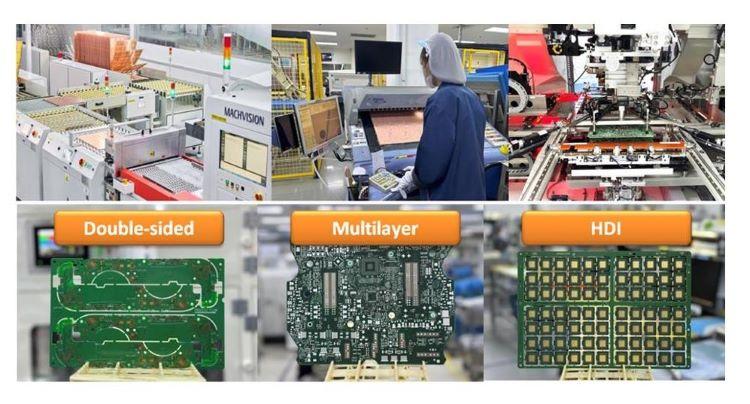
| PCB (Printed Circuit Board) | Printed Circuit Boards (PCBs) are fundamental components in a wide range of electronic products, serving as the foundation of electronic circuits. All electronic devices used in daily life contain one or more PCBs. These circuit boards consist of interconnected copper traces that provide pathways for electrical signals, enabling the support and interconnection of electronic components. A PCB consists of two primary elements: the substrate (or base) and the conductive layer. The substrate is a thin insulating material, typically made of woven fiberglass fully coated with epoxy resin. This substrate material provides thermal, mechanical, and electrical insulation properties, making it suitable for various electronic applications. Copper conductors are etched or plated onto the substrate to create electrical signal pathways between components. KCE Electronics Public Company Limited (KCE) and its subsidiary, KCE Technology Company Limited (KCET), specialize in the following PCB products:
PCBs are utilized across multiple industries, including automotive, industrial equipment, telecommunications, satellite systems, data storage systems, consumer electronics, medical devices, mobile phones, and computer equipment As PCB manufacturing requires advanced technology and strict compliance with industry standards, the Company is committed to continuously enhancing quality control, manufacturing technology, and workforce competency. The Company has expanded its production capacity and appointed distributors in various countries to respond to the increasing global demand for PCBs.
|
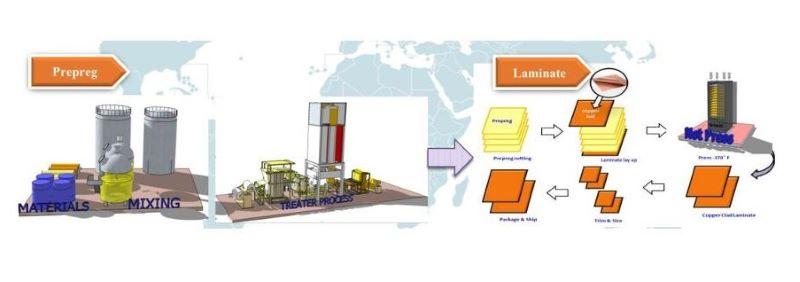
| Prepreg & Laminate | Thai Laminate Manufacturer Company Limited (TLM) is a manufacturer of FR-4 Prepreg and Copper Clad Laminate (CCL), which are key materials used in the production of Printed Circuit Boards (PCBs). Prepreg is fiberglass fabric impregnated with epoxy resin in a semi-cured state, serving as an insulating layer and a structural bonding layer within circuit boards. Copper Clad Laminate is produced by laminating layers of prepreg and cladding them with copper foil, providing a base material for forming electrical circuit patterns. FR-4 material is recognized for its strength, heat resistance, and excellent electrical insulation properties, making it suitable for a wide range of electronic industry applications.
TLM’s manufacturing process is divided into two main parts: Prepreg production and Laminate production, as follows: 1. Prepreg Production Prepreg is manufactured by impregnating fiberglass fabric with epoxy resin and subsequently curing it to achieve material properties suitable for application. The material is then rolled and stored under controlled temperature and humidity conditions to maintain quality prior to sale to customers or use as raw material for Laminate production.
2. Lamination Production Laminate sheets are produced by cutting and stacking prepreg layers according to the thickness required by customers. Copper foil is then applied to both sides, followed by pressing and curing under controlled conditions to ensure proper bonding into a single consolidated sheet. The laminate sheets are subsequently trimmed to the required dimensions, packaged, and delivered to customers.
|
| Chemical Product | Chemtronic Products Co.Ltd.’s main products are Copper Sulphate and Tin Oxide which use the raw materials from the recycle PCB spent and Scrap. The Copper Sulphateare applied for feed mill, fishery and fertilizer industry with the certificate of FAMI-QS, Department of Livestock Development and Department of Fisheries. For Tin Oxide is applied as raw material for tin related products. |

Research & Development
Has R&D Policy (Y/N)
Yes
Introduction
Innovation Development
Amid the rapidly evolving environment of the Printed Circuit Board (PCB) industry, driven by technological advancements, increasingly complex customer requirements, and global competition, the Company places strong emphasis on continuous innovation across all dimensions of its operations. The Company is committed to strengthening its research and development capabilities, improving manufacturing processes, and adopting advanced technologies to enhance product quality, operational efficiency, and sustainability. With a forward-looking vision and strong adaptability, the Company maintains its leadership position in Thailand’s PCB industry while creating sustainable value for customers, stakeholders, and society.
Innovation Management Approach
Fostering a Culture of Innovation and Talent Focus
A key driver of KCE’s success is its systematic commitment to fostering a culture of innovation across all levels of the organization, from executives to operational employees. Personnel are encouraged to challenge conventional thinking, propose new ideas, and continuously improve working methods. This culture empowers employees to take initiative and actively contribute to operational improvements and business performance.
The Company regularly organizes cross-functional brainstorming sessions to promote collaboration across the organization, enabling teams to exchange perspectives and integrate diverse expertise. As a result, innovation is embedded across all functions rather than being limited to any single department. In 2025, this employee-driven approach resulted in the successful completion of 125 QIP/Kaizen projects.
Technology Development: Process Enhancement and Automation
Innovation remains a core pillar of the Company’s strategy to sustain competitiveness in the PCB industry. The Company continues to invest in advanced manufacturing technologies and process enhancements to improve product quality, increase operational efficiency, and strengthen long-term scalability. During 2025, several key technology initiatives progressed from pilot phases to full-scale implementation. At the same time, new systems were introduced to further strengthen the Company’s manufacturing capabilities.
Projects Fully Implemented in 2025
Inner and Outer Layer Circuit Imaging: The Company has fully implemented Laser Direct Imaging (LDI) technology to replace conventional ultraviolet (UV) exposure processes. This transition has reduced scrap rates and decreased reliance on manual labor, resulting in significant production cost reductions. In addition, LDI technology supports higher circuit density and improves registration accuracy, enabling the Company to meet customer quality expectations and requirements more effectively.
Solder Mask Printing: The Company has transitioned the solder mask printing process on printed circuit boards to a fully automated system, replacing the semi-automatic process. This upgrade reduces manual handling, minimizes the risk of defects or scrap, increases production throughput, and enhances process consistency and product quality.
Solder Mask Exposure: The Company has fully implemented Laser Direct Imaging (LDI) technology in the solder mask exposure process. The system supports a wide range of solder mask inks and delivers higher exposure accuracy through a fully automated process. This results in improved consistency and enhanced overall production efficiency.
Projects under Development and Implementation
Automated Guided Vehicle (AGV) System: The Company has completed testing of the Automated Guided Vehicle (AGV) system and is preparing for deployment. This system will automate material handling, improve overall workflow efficiency within production areas, reduce manual operations, and minimize accidents associated with material movement.
Electrolytic Copper Plating: The Company plans to install an in-line horizontal electroless copper plating process in conjunction with a Vertical Continuous Plating (VCP) line. This investment will enhance copper plating consistency, process stability, and production capacity. It will also support the reliable production of very thin PCB panels and meet higher performance requirements.
Legend Printing: The Company plans to adopt inkjet-based printing technology for legend printing to enable direct printing of 2D Matrix and QR codes on printed circuit boards. This capability supports customer traceability requirements.
Solder Mask Thermal Baking: For the pre-bake and post-bake processes, the Company plans to replace gate-type ovens with double-row conveyorised machines. This upgrade will reduce manual handling, improve energy efficiency, optimize installation space, and provide more consistent temperature control
Product Development with Customer-Centric Approach and Customer Engagement
The Company’s innovation focuses on developing products that address the actual needs of customers and the market. Through continuous market research, systematic collection of customer feedback, and close monitoring of industry trends, the Company remains responsive to evolving application requirements.
This approach has led to the development of a wide range of advanced PCB solutions, including mSAP technology integrated with LDI and vacuum etching processes for high-density circuit designs, High-Density Interconnect (HDI) PCBs with Every-Layer Interconnection (ELIC), as well as semi-flex PCBs and thermal management PCBs featuring high copper thickness, metal core structures, copper inserts, and heat sink integration.
In parallel, the Company continues to advance its manufacturing process technologies, including fine-line HDI technology, advanced low-loss and high-thermal-performance materials, and embedded or integrated structures. These developments support emerging applications in Artificial Intelligence (AI), 5G technology, data centers, the Internet of Things (IoT), and electric power systems. By closely aligning development activities with customers’ product roadmaps, the Company strengthens its position as a reliable partner capable of delivering solutions that meet both current and future technological requirements.
Environmental, Social, and Governance (ESG) Commitment
The Company’s ESG initiatives include environmentally friendly process improvements, responsible sourcing of raw materials, and continuous community engagement. By integrating innovation with sustainability, the Company strengthens its long-term business resilience while responding to increasing stakeholder expectations. This commitment enhances trust among customers, suppliers, employees, and the communities in which the Company operates, supporting sustainable business operations.
R&D Cost — Description
In the fast-paced and ever-evolving landscape of PCB manufacturing, the Company stands as a beacon of innovation, consistently pushing the boundaries of what is possible. With a steadfast commitment to creativity, adaptability, and forward-thinking, our company has become a leader in the Thailand PCB industry, setting new standards and redefining the notion of what is achievable. Innovation at the Company is central to maintaining a leadership position in the rapidly evolving Printed Circuit Board (PCB) industry. The Company remains committed to staying at the forefront of technological advancements by consistently investing in research and development. As the PCB industry evolves with new materials, advanced processing methods, and enhanced capabilities, the Company is quick to integrate these innovations into its operations.
R&D Cost — Label
Research and development (R&D) expenses over the past 3 years (Million Baht)
R&D Cost — This Year
50.03
R&D Cost — Last Year
47.75
R&D Cost — 2 Years Ago
53.45
Assets Used in the Business
Permanent Assets — Description
the Company operates in the manufacturing and distribution of printed circuit boards (PCBs), its primary fixed assets consist of land, buildings, machinery, and equipment used in the production process. These assets support the manufacturing of products for the parent company and certain subsidiaries. In addition, the Company maintains overseas offices for some subsidiaries to serve as sales representatives in foreign markets.
Permanent Assets — Appraisal
| Asset | Ownership | Obligation | Appraisal Value | Description |
|---|---|---|---|---|
| Land, Buildings, Machinery, and Equipment | Owner | Subject to obligations on behalf of subsidiaries. | 7,267,230,992 | They are assets used for business operations |
Intangible Assets — Description
Intangible assets consist of copyrights, software, customer relationships, and goodwill.
Intangible Assets — Appraisal
| Asset | Type | Appraisal Value | Description |
|---|---|---|---|
| Copyrights, Software, Customer relationships, and Goodwill | Copyright | 1,358,801,504 | Customer relationships arose from the acquisition of a subsidiary. |
Has Subsidiaries Investment Policy (Y/N)
Yes
Subsidiaries Investment Policy — Description
The company operates its business in accordance with the principles of good corporate governance. Therefore, when making investment decisions in various businesses, the company not only considers the returns that all stakeholders will receive from such investments but also places great importance on conducting its business in line with the good corporate governance principles set forth by the Stock Exchange of Thailand and the Office of the Securities and Exchange Commission, Thailand
The company has a policy to invest in subsidiaries or joint ventures that support its core business operations, as well as in companies that align with its goals, vision, and strategic growth plans. Such investments are intended to enhance the company’s performance and profitability, or to invest in businesses that create synergies with the company, thereby strengthening its competitiveness and enabling it to achieve its goal of becoming a leading player in its core business. In addition, subsidiaries and/or joint ventures may consider investing in other businesses that demonstrate growth potential, offer opportunities for business expansion, or provide benefits to the group’s overall operations, with the aim of generating attractive investment returns.
Marketing Policy & Competition
Reporting Mode
3117
Marketing Policy (Overall)
Marketing of key products and services
Competitive Strategy of the Group
In order to remain the competitiveness potential among other manufacturers in the market, the Company has a policy in maintaining its product quality, building good relationships with customers through the marketing agent and representatives to maintain a major market share in the automotive industry. The automotive electronics market has a continuous growth trend, and there is less number of competitors in the market. A new manufacturer will need to take time to develop the production technology. In addition, the Group continuously improves the production process to keep pace with the on-going changing technology and as a result, the Group is able to offer a wider variety of products. This is important in responding to the needs of customers. The Company has competitive strategies as follows:
1.1 Product selling price: The Company will consider many factors, such as, the cost of production which is calculated from the cost of raw materials, the level of technology and complexity of production and the order volume. The quoted selling price must align with the market price and competitive with the price of other competitors in the world market among the products with high technology as well.
1.2 Product: The Company has always kept following the advancement in technology of the customer’s products, including the development of new technology in PCB production in order to response to the customers’ requirement which have a trend of increased complexity in the future.
1.3 Product cost: As the Company has a subsidiary company (Thai Laminate manufacturer Co., Ltd.) who manufactures PREPREG and LAMINATE, which is the main raw materials for production for the group, therefore this gives an advantage in production cost and flexibility in raw material procurement.
1.4 Service: The Company places an importance to the servicing and delivery of product to meet the requirements of customer and create good relationship with customers, including taking care and providing intimate sales services both before and after sales.
Marketing strategy
Strengths and weaknesses in marketing can be summarized as follows.
Strength
Domestic Labor cost in production is still lower compared to labor cost in other countries in Europe region, United States and some countries in Asia.
The company is located in the free export zone which is exempted from import duty of both machine and raw materials. The Company and its subsidiaries received investment promotion from the Board of Investment of Thailand (BOI), and as such the Corporate Income Tax is exempted.
Weaknesses
Raw materials used in the production of PREPREG and LAMINATE of Thai Laminate Manufacturer Co., Ltd., such as epoxy resin, fiberglass and copper foil must be imported from oversees as there is no manufacturer in Thailand.
Electronics industry and the technology used in domestic production has not been promoted as modern as in foreign countries, and still rely on some advance technology from abroad to use in production.
Pricing policy
The Company has a policy to set product selling prices to be in line with the market price, and at the level that is competitive, in consideration to the quality of the product and cost of production. Every 6 months, the Company benchmarks its price to other competitors’ for guideline in determining selling price setting.
Target customers and distribution channels
The Company has a sales policy with target customers in all different industry. This is to reduce the risk in the event that a certain industry might face an economic or market problem.
Current customer:
The Company’s customers are manufacturer in various industries as follows:
Automotive Electronics
Telecommunication
Industrial Electronics
Medical Equipment
Computer & Network
Consumer Products
At present, the company has a total customer base of more than 300 customers. The Company has a policy to limit sales to an individual customer for not exceeding 30% of the total sales to reduce the risk of each customer. In 2025, top 10 major customers placed order accounted to 66% of total sales.
Target customer in the future
For prospective customers in the future, the Company will continue to mainly focus on customers in the automotive industry because the Company has a high competitive advantage and being well trusted by customers in the automotive industry. There may be an increase in the proportion of customer in the industrial electronics, the High-end consumer product and the telecommunication. Sales office of an overseas subsidiary
Distribution channels
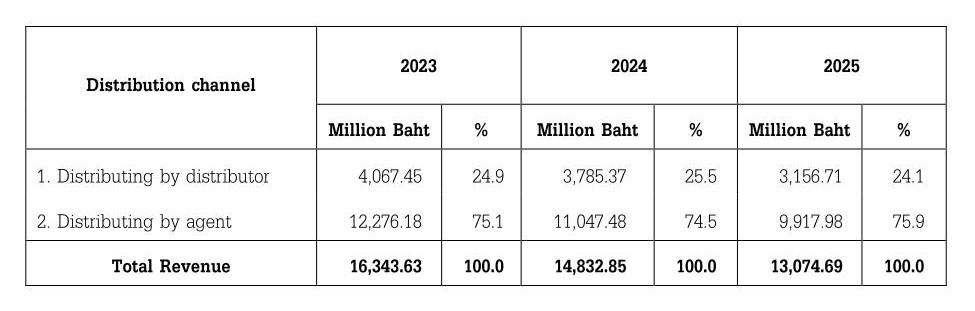
The Company manufactures products according to the customer’s instruction. All orders are gathered by the sales representatives in the overseas and send to the factory to produce the product according to the customer’s requirements. The finished products will be distributed and delivered to customers via 2 channels as follows:
1.1 Distribute via a sales distributor. The distributor will pay the company according to the specified payment terms. Approximately 24.1% of the Company's revenue comes from the Distributor channel.
1.2 Distribute directly to the customer, via a sales agent. The customer will pay the Company directly, once the Company received the payment, the Company will pay a commission in return to the agent. Approximately 75.9% of the Company's revenue comes from selling products directly to customers.
In 2023-2025, the Group has sales revenue by classified sale channel as follows:
The Group has 6 sales office (being the Company’s subsidiary) representatives in Thailand and abroad as follows:
KCE (Thailand) Co., Ltd. has registered on March 8, 2007 and started business in May 2007, being an agent to gather orders from customers in Thailand, in the similar manner as a foreign agent. Previously sales to customers in Thailand was handled by the Company. Most products are re-exported to foreign countries. In 2025, the Company has sold its products through the agent in Thailand for the amount of 12.2% of total sales.
KCE SINGAPORE PTE., LTD. is located in Singapore and responsible for customers in Asia such as China, Korea, Hong Kong, Malaysia, Philippines, Singapore and Australia except Thailand and customers located in many European countries. In 2025, the company has sold products in these regions amounted to 27.2% of the total sales.
KCE AMERICA INC. is located in California, U.S.A. It is primarily responsible for customers in the United States, Mexico, Brazil and Canada, and some customers in Asia. In 2025, this distributor has sold products in those areas amounted to 20.6% of the total sales.
INTERNATIONAL CIRCUIT LTD. (registered business name is ‘KCE EUROPE’) is located in the United Kingdom. The company’s business is a PCB distributor, and it is responsible for all customers in Europe with the exception of Germany, Austria and Romania. In 2025, the company has sold products accounted for 24.0% of total sales.
KCE PRINTED CIRCUIT BOARDS GMBH is located in Munich, Germany, who is responsible for customers in Germany and Romania. In 2025, the company has sold products accounted for 15.9% of total sales.
Industry & Competition (Overall)
INDUSTRY STATUS AND COMPETITION
Electronics Market and Industry
The electronics industry is considered a strategic industry worldwide. It serves as a crucial foundation for the development of other industries such as automotive, digital, medical devices, automation systems, and robotics, among others. Printed Circuit Boards (PCBs) are a key component in various electrical appliances and electronic devices.
PCBs have extensive applications. The research and market analysis focus on four key areas:
Firstly, consumer electronics, primarily driven by smartphones and wearable devices. The advent of 5G technology has spurred smartphone upgrades, while the surge in wearable devices like TWS headsets and smartwatches has notably increased the demand for corresponding PCBs. The creation of high-quality wireless smart wearable devices rely on the supply of high-quality PCBs.
Secondly, the server and data storage sector, the growth opportunity of this sector is driven by AI systems which expected to boost up the server, data storage solutions and networking equipment in this segment to 45.5% growth in 2024 and continue at high growth rate 39.9% in 2025. Escalating demand for AI systems, including servers and data centers, is projected to create a significant impact on the PCB market. The innovation and development of advanced materials has been required to serve the higher level and advanced performance products. Secondly, the server and data storage sector, the growth opportunity of this sector is driven by AI systems which expected to boost up the server, data storage solutions and networking equipment in this segment to 45.5% growth in 2024 and continue at high growth rate 39.9% in 2025. Escalating demand for AI systems, including servers and data centers, is projected to create a significant impact on the PCB market. The innovation and development of advanced materials has been required to serve the higher level and advanced performance products.
Thirdly, automotive electronics, with the continuous advancement of the automotive industry, particularly in the realm of Electric Vehicles (EVs), the use of electronic technology has continued to increase in a comprehensive platform with various functions. However, the growth of this market is declined by 4.8% in 2024 and likely adjust to 2.1% in 2025. The growth of automotive market is due to the higher electronic content per vehicle and the increasing penetration of advanced driver assistance (ADAS). Growth opportunities for the automotive electronics supply chain are driven by EVs adoption to replace traditional ICE (Internal combustion engine) due to move to Net Zero. PCB manufacturing has become increasingly important in the automotive supply chain which require higher performance and reliability products.
Fourthly, communication infrastructure, included wired and wireless infrastructure products, such as base stations and routers. Over the long term, factors like continued 5G base station construction and the recovery from global health crises will drive a new phase of infrastructure development. Additionally, ongoing wired network expansions indicate sustained growth for communication PCBs. This category is show of 2.1% growth in 2025 over 2024.
Overall Electronics Market Outlook
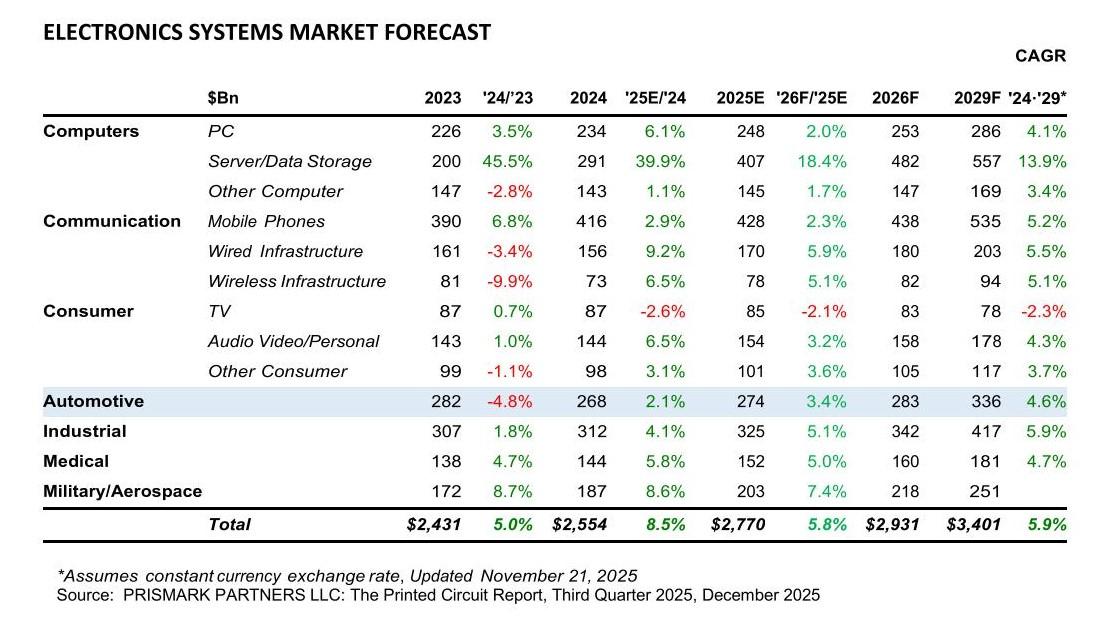
According to industry forecasts, the global electronics systems market is expected to maintain a steady growth trajectory over 2025–2026. Total market value is projected to increase from approximately USD 2.55 trillion in 2024 to around USD 2.77 trillion in 2025, and further to approximately USD 2.93 trillion in 2026, representing an average annual growth rate of about 5–6%
This growth is underpinned by long-term structural drivers, including digital transformation, data consumption, automation, electrification, and increased electronics content across multiple industries.
While growth momentum remains positive, the pace of expansion varies by end-market segment, reflecting differences in technology adoption cycles, investment intensity, and macroeconomic conditions.
The total electronics market is projected to grow at a mid-single-digit rate, with stronger acceleration anticipated from 2026 onward as global economic conditions stabilize and capital expenditure gradually recovers across key industries.
Automotive Electronics Market
The automotive electronics segment, which remains the Company’s primary end market, is expected to continue growing at a moderate pace relative to other electronics segments. Industry data indicates that automotive electronics is projected to grow at an average rate of approximately 4–5% per annum over the medium term.
The automotive segment continues to grow but at a slower pace compared to other electronics segments. Industry data indicates that automotive electronics growth remains constrained in the near term due to several factors:
EV market normalization: Following a period of rapid expansion, electric vehicle (EV) adoption has entered a more cautious phase, influenced by consumer affordability concerns, charging infrastructure readiness, and regulatory adjustments in several regions
OEM inventory management: Automotive manufacturers remain prudent in managing production volumes and inventory levels amid uncertain demand recovery.
Cost and pricing pressures: Higher interest rates and cost sensitivity among consumers have moderated vehicle purchasing decisions.
Despite these short-term challenges, the Company continues to view automotive electronics as a structurally attractive long-term market, driven by increasing electronic content per vehicle, advanced driver assistance systems (ADAS), electrification, safety requirements, and vehicle connectivity. These trends support ongoing demand for high-reliability, high-density, and multi-layer PCBs, particularly HDI products, which align well with the Company’s core technological capabilities.
High-Growth Segments and Market Diversification Strategy
Beyond the automotive sector, several electronics segments are expected to demonstrate above-average growth rates over the medium term. Notably, server and data storage systems are projected to be the fastest-growing segment, with a compound annual growth rate (CAGR) of approximately 13–14%, supported by expanding cloud infrastructure, artificial intelligence (AI), data centers, and high-performance computing.
In addition, industrial electronics continues to show steady growth, driven by factory automation, robotics, smart infrastructure, and energy management systems. The aerospace and defense segment is also expected to expand at a relatively strong pace, supported by increased defense spending, modernization programs, and advanced avionics systems, all of which require highly reliable and technologically sophisticated PCB solutions.
Although these segments are not yet core contributors to the Company’s revenue, they represent strategic diversification opportunities, due to typically require high-layer-count, high-density, and high-reliability PCBs, similar to the advanced products already developed for automotive and industrial customers. The Company has therefore established a clear strategy to explore and selectively expand into server, industrial, and aerospace applications. As such, the Company continues to evaluate this segment as a future diversification opportunity, leveraging existing manufacturing know-how while selectively developing process capabilities to meet the specific technical requirements of these markets. These markets typically involve stringent quality, reliability, and certification requirements, which act as natural entry barriers and are aligned with the Company’s long-term focus on technology-driven differentiation and also helps reduce the Company’s long-term reliance on the automotive market as a single business segment.
PCB Market Forecast
Global PCB Market Outlook
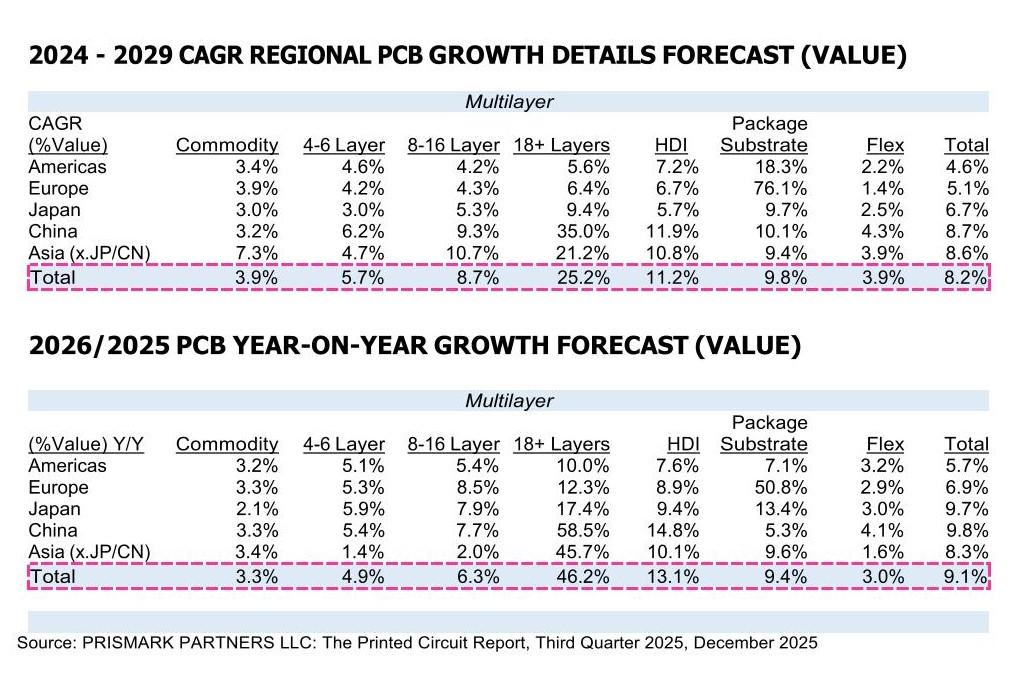
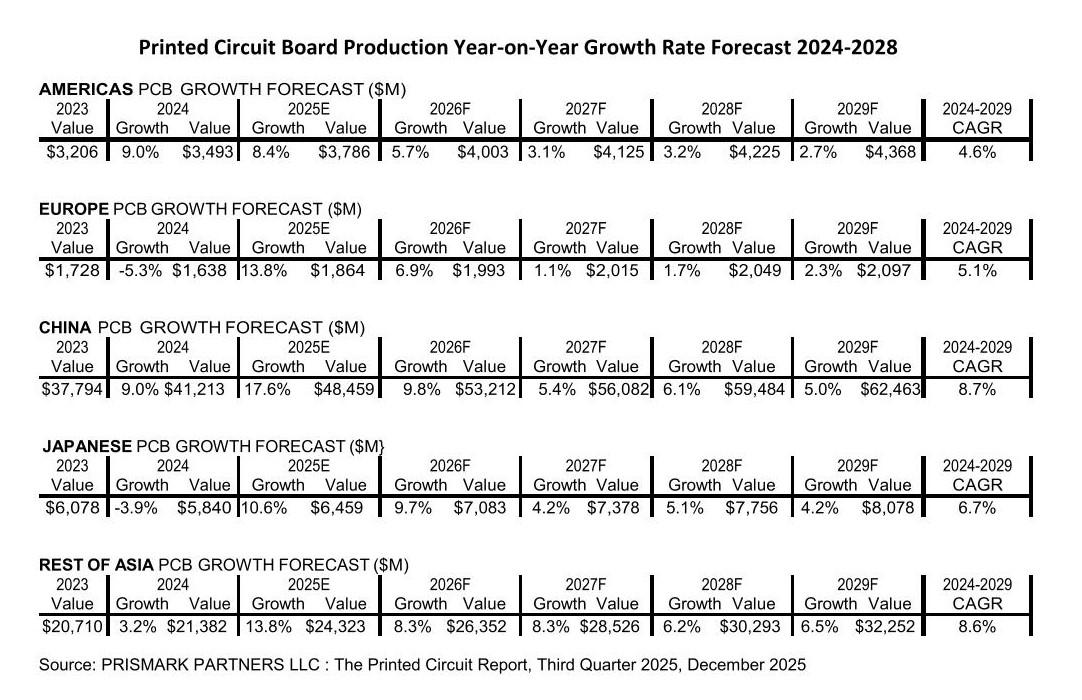
According to industry forecasts, the global printed circuit board (PCB) market is expected to maintain a solid growth trajectory over the medium term, supported by continued expansion in electronics systems across multiple end-market applications. Based on forecasts, global PCB market value is projected to grow at a compound annual growth rate (CAGR) of approximately 8.2% during 2024–2029, driven primarily by increasing demand for high-density, multi-layer, and technologically advanced PCB products.
Regionally, PCB demand growth remains strongest in Asia, particularly China and other Asian countries, where PCB market value is expected to grow at CAGRs of approximately 8.7% and 8.6%, reflecting ongoing investment in electronics manufacturing ecosystems. Europe and the Americas are also expected to experience steady growth, with CAGRs of approximately 5.1% and 4.6%, supported by gradual recovery in industrial demand and continued investment in automotive, defense, and data infrastructure applications.
Technology and Product Mix Trends
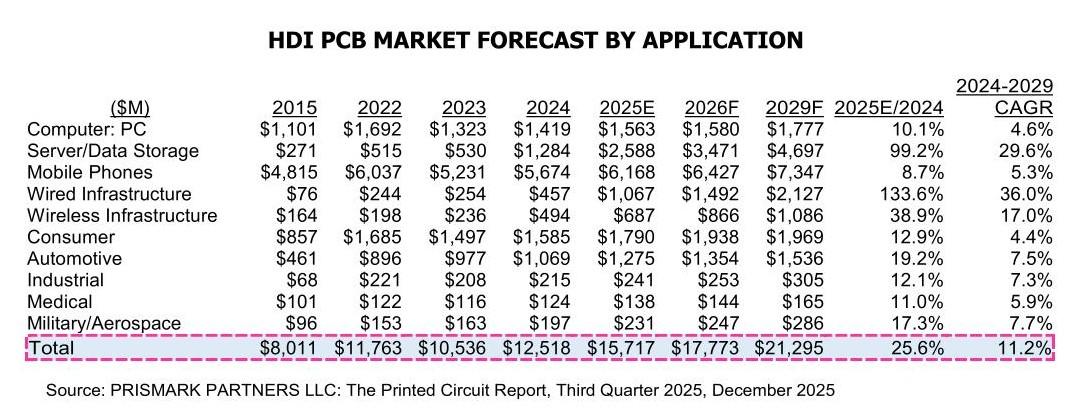
From a technology perspective, market growth is increasingly concentrated in advanced PCB categories, particularly HDI, high-layer-count multilayer boards, and substrates. Industry forecasts indicate that, on a global basis, HDI PCB value is expected to grow at a CAGR of approximately 11.2% during 2024–2029, significantly outpacing standard commodity PCBs, driven by product miniaturization, higher signal integrity requirements, and increased system complexity.
Within multilayer PCBs, higher-layer products show stronger growth momentum. PCBs with 18 layers and above are forecast to grow at a CAGR of approximately 25.2%, while 8–16 layer PCBs are expected to grow at around 8.7%, reflecting rising complexity in electronic system design. These trends align with increasing requirements for miniaturization, higher signal integrity, and enhanced reliability across automotive, industrial, and data infrastructure applications, which underscore a structural shift in the PCB market from volume-driven growth toward value-driven growth, where technical capability, quality, and reliability play a more critical role in supplier selection.
Application-Based Demand Outlook
By application, the automotive electronics segment remains a key demand driver for PCBs, with market value projected to grow at a CAGR of approximately 4.6% during 2024–2029. While growth is more moderate compared to some other electronics segments, automotive demand continues to shift toward higher-value PCBs, supported by increasing electronic content per vehicle, advanced driver assistance systems (ADAS), electrification, and vehicle connectivity.
Notably, server and data storage applications represent the fastest-growing HDI PCB end market, with forecast CAGR of approximately 29.6% during 2024–2029. Growth is driven by cloud computing, artificial intelligence (AI), and data center expansion. Although this segment is not currently the Company’s core market, it represents a significant long-term opportunity, given the technical similarities in high-layer-count and high-reliability PCB requirements.
Other segments, including industrial, medical, and aerospace/defense, are also projected to grow steadily, with HDI PCB demand growing at CAGRs ranging from 5.9% to 7.7%, supported by automation, smart infrastructure, and high-reliability system requirements.
Regional PCB Market Dynamics
Regionally, PCB demand growth remains strongest in Asia, particularly China and ASEAN countries, where expanding electronics manufacturing ecosystems continue to support both volume and technology upgrades. Europe is expected to experience a recovery-driven growth phase following weakness in 2024, while the Americas show stable expansion supported by industrial, defense, and data infrastructure investments.
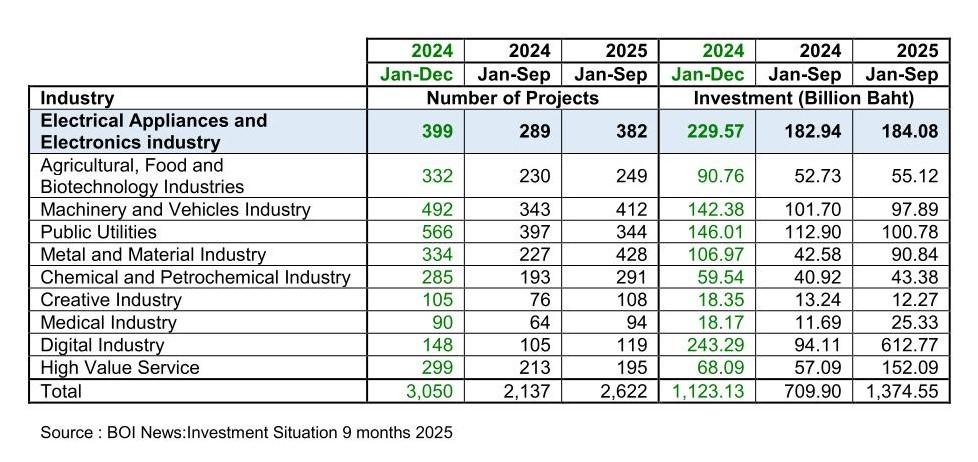
Thailand continues to play an important role in the regional PCB supply chain. According to BOI data, investment in the electrical appliances and electronics industry increased during the first nine months of 2025, reflecting continued confidence in Thailand as a manufacturing base for electronics and PCB-related industries.
The electronics industry in Thailand shows continuous and significant growth trends, driven by foreign investments relocating manufacturing bases to Thailand. According to information from The Office of the Board of Investment (BOI), the first 9 months of the year 2025 witnessed a substantial increase in the value of investment promotion applications, particularly in the electrical appliances and electronics industry. The following table illustrates the investment promotion trends during this period.
The printed circuit board (PCB) industry is experiencing rapid growth and is expected to exceed a market value of USD 100 billion within the next five years. Thailand is emerging as a key global manufacturing base for PCBs. In response, the Board of Investment of Thailand (BOI) has designated the PCB industry as one of five strategic industries under its 5-year investment promotion policy (2024–2027). This initiative aims to transform Thailand toward a “new economy” and enhance its global competitiveness by offering tax and financial incentives, such as corporate income tax exemptions and import duty exemptions on machinery and raw materials, to attract both domestic and foreign investment.
In addition, the BOI has expanded its promotion to cover the entire PCB Supply Chain, ranging from PCB manufacturing support activities such as Lamination, Drilling, Plating, and Routing, to the production of key raw materials, including Copper Clad Laminate (CCL), Flexible CCL (FCCL), and Prepreg, as well as other essential materials such as Dry Film, Transfer Film, and Backup Boards. The policy also emphasizes strengthening domestic supply chain linkages.
According to projections by the Thailand Printed Circuit Association (THPCA), the rapid increase in investment by leading PCB manufacturers will generate significant labor demand, requiring at least 80,000 workers within the next two years. To address this, the BOI supports workforce development through collaboration with educational institutions and the private sector, including job-matching initiatives and upskilling/reskilling programs. These policies help create high-value jobs, develop skilled human capital and domestic supply chains, increase export value, strengthen Thailand’s electronics industry, and position Thailand as a major PCB manufacturing hub at both regional and global levels.
Company Strategy Alignment with Global PCB Market Growth
In response to the accelerating evolution of global electronics and PCB market demand, the Company has continued to align its strategic direction with long-term industry growth trends. The Company continues to step up technology development to support customer requirements for increasingly complex, high-performance and high-reliability electronic products.
To support customers’ evolving requirements, the Company remains firmly committed to advancing its technological capabilities. This includes ongoing investment in advanced machinery, optimization of production line layouts, and continuous enhancement of process technologies to improve manufacturing precision, efficiency, and yield. In parallel, the Company places strong emphasis on the development of skilled technicians and engineers, recognizing human capital as a critical foundation for sustaining technological advancement.
In addition, the Company has embedded energy efficiency and environmental responsibility as core considerations in its operational strategy. Initiatives aimed at reducing energy consumption, improving resource efficiency, and minimizing environmental impact are actively integrated into production planning and capital investment decisions. These efforts support not only cost optimization but also the Company’s commitment to sustainable manufacturing practices in line with global environmental expectations.
The Company continues to uphold product quality as a fundamental pillar of its competitive advantage. As PCBs serve as a core component that directly affects the performance and reliability of end-user electronic products, maintaining consistently high quality standards remains essential. This focus enables the Company to support customers in delivering reliable, high-quality products to their end markets, particularly in applications with stringent performance and safety requirements.
Furthermore, continuous improvement remains a central element of the Company’s operating philosophy. Through ongoing evaluation of processes, technologies, and organizational practices, the Company seeks to enhance efficiency, quality, and responsiveness to market changes. This disciplined approach allows the Company to adapt effectively to rapid technological shifts while strengthening its long-term competitiveness and alignment with global PCB market growth.
Procurement of Products & Services
Reporting Mode
3117
Procurement (Overall)
The Company places importance on the efficient procurement of products and services to support business operations and maintain product quality. The Company manages its supply chain systematically, from production capacity planning, procurement of raw materials used in the manufacturing process, and supplier relationship management, to the diversification of sourcing both domestically and internationally. This approach strengthens supply chain resilience and supports the sustainable growth of the business.
Raw Material Acquisition (Overall)
The Company procures raw materials for the production of Printed Circuit Boards (PCB) from manufacturers and suppliers both domestically and internationally. Key raw materials include Copper Clad Laminate (CCL), Copper Foil, Prepreg, chemicals used in plating and etching processes, Dry Film, Solder Mask, and printing inks, all of which are critical to the quality and reliability of the products.
The Company selects suppliers through an Approved Vendor List (AVL) process, considering factors such as product quality, manufacturing standards, financial stability, environmental management, and the ability to ensure continuous supply. Most key suppliers are internationally recognized manufacturers located in Asia and Europe.
To manage supply chain risks, the Company adopts a supplier diversification strategy and identifies alternative suppliers for critical raw materials. The Company also enters into medium- to long-term procurement contracts with certain key manufacturers to enhance stability in supply volumes and pricing, particularly for raw materials linked to global market prices, such as copper. In addition, the Company manages inventory through an Enterprise Resource Planning (ERP) system and Material Requirements Planning (MRP) to maintain appropriate inventory levels for operational needs.
Supplier Code of Conduct
The Company has established a Supplier Code of Conduct to guide suppliers in conducting business responsibly and transparently, in alignment with Environmental, Social, and Governance (ESG) principles.
The Company also provides channels for stakeholders to report complaints or whistleblowing cases related to illegal activities, regulatory violations, or human rights violations within the supply chain through the Company’s website and via email at whistleblower@kce.co.th. Appropriate investigation processes and whistleblower protection measures are implemented.
Supplier Risk Management and Assessment
The Company integrates sustainability considerations into its procurement processes by establishing relevant policies, including the Environmental Policy, Anti-Corruption Policy, Conflict Minerals Policy, Supplier Diversity Policy, and Sustainable Procurement Policy.
Supplier performance is continuously monitored through quarterly Supplier Performance Rating assessments, annual Supplier Risk Assessments related to sustainability, and Supplier Self-Assessment reviews conducted every two years. These evaluations cover ESG criteria, including environmental, social, and governance aspects.
Support for Domestic Suppliers
The Company promotes procurement from domestic suppliers to support the local economy, enhance supply chain resilience, and reduce environmental impacts from long-distance transportation. This approach helps mitigate supply risks while improving cost efficiency and delivery lead times.
Distributors (Overall)
Significant Suppliers: Suppliers that are critically important to the Company’s operations. Criteria include annual purchase value exceeding Baht 100 million with consistent procurement; materials specified by customers; goods or services that are not substitutable; or suppliers with high ESG risk levels.
Number of Raw-Material Distributors (Overall)
15
Production Capacity (Overall)
| Item | Unit | Unit (if Other) | Used | Capacity |
|---|---|---|---|---|
| KCE Group | Others | Sq.Ft. | 65 | 43,200,000 |
| KCE Electronics Public Company Limited | Others | Sq.Ft. | 59 | 25,200,000 |
| KCE Technology Co.,Ltd. (subsidiary) | Others | Sq.Ft. | 65 | 18,000,000 |
Domestic/Overseas Purchase Proportion (Overall)
| Raw Material | Source Country | Value |
|---|---|---|
| Laminate,Prepreg | Thailand | 2,129,343,088 |
| Copper foil | China | 129,478,773 |
| Laminate,Prepreg,Copper foil | Hong Kong | 609,680,588 |
| Laminate,Prepreg | Singapore | 8,526,560 |
| Laminate,Prepreg,Copper foil | Taiwan | 537,786,614 |
Nature of Business — Overview
Introduction
The Company and its subsidiaries are involved in the manufacturing and distributing of printed circuit boards (PCBs), which are the foundation component for a wide range of electronic devices. Its key customer base includes manufacturers of automotive electronic equipment, telecommunication devices, computer networks, industrial equipment, and medical equipment. Almost all of the Company’s production is for exporting worldwide, Europe, United States of America and Asia.
Projects Under Construction
Has Projects Under Construction (Y/N)
No
Issuance of Other Securities
Introduction
None
Debentures & Bills of Exchange
Has Debentures (Y/N)
No
Convertible Securities
Has Convertible Securities (Y/N)
No