

Sustainability · 2025
In this section57 topics
- Sustainability Policy3 items
- Sustainability Goals & UN SDGs3 items
- Policy Review2 items
- Business Value Chain1 item
- Stakeholder Analysis1 item
- Environmental Sustainability — Overview1 item
- Environmental Policy & Guidelines5 items
- Environmental Policy Review1 item
- Energy Management — Overview1 item
- Energy — Plan & Guidelines2 items
- Energy — Electricity Consumption1 item
- Energy — Fuel Consumption1 item
- Energy — Targets2 items
- Energy — Performance & Outcomes2 items
- Water Management — Overview1 item
- Water — Plan & Guidelines2 items
- Water — Withdrawal, Discharge & Consumption1 item
- Water — Targets2 items
- Water — Performance & Outcomes2 items
- Waste — Plan & Guidelines3 items
- Waste — Generation, Disposal & Recycling1 item
- Waste — Targets2 items
- Waste — Performance & Outcomes2 items
- Greenhouse Gas — Overview1 item
- GHG — Plan & Guidelines2 items
- GHG — Emissions1 item
- GHG — Emissions Verification4 items
- GHG — Principles & Standards1 item
- GHG — Targets1 item
- GHG Targets — Net Zero1 item
- GHG — Performance & Outcomes2 items
- Environmental Legal Incidents2 items
- Social Policy & Guidelines6 items
- Social Policy Review1 item
- Social — Principles & Standards Practised1 item
- Human Rights Due Diligence2 items
- Employee Management — Overview1 item
- Employees — Plan & Guidelines3 items
- Employees — Workforce1 item
- Employees — Remuneration & Provident Fund1 item
- Employees — Training & Development2 items
- Employees — Occupational Health & Safety2 items
- Employees — Labour Relations2 items
- Employees — Employee Representation3 items
- Employees — Targets2 items
- Employees — Performance & Outcomes2 items
- Customer Management — Overview1 item
- Customers — Plan & Guidelines3 items
- Customers — Satisfaction Results1 item
- Customers — Targets2 items
- Customers — Performance & Outcomes2 items
- Community & Social — Overview1 item
- Community & Social — Plan & Guidelines3 items
- Community & Social — Targets2 items
- Community & Social — Performance & Outcomes2 items
- Law Violation Incidents1 item
- Law Violations — Case Detail & Corrective Measures1 item
Sustainability Policy
Has a Sustainability Policy
Yes
Policy Description
The KCE Group recognizes the importance of sustainable development as a foundation for long-term business success. The Group conducts its business with an emphasis on sustainable economic growth, supported by strong corporate governance and effective risk management, alongside responsible operations toward society and the environment. The Group is also committed to supporting the United Nations Sustainable Development Goals (UN SDGs) and adopts them as guiding principles for organizational operations across all dimensions economic, social, and environmental—under good governance practices.
Key Principles of the KCE Group’s Sustainability Policy
Operate business in accordance with good corporate governance principles:
Operate with integrity, ethics, and transparency, supported by appropriate risk management and internal control systems. Continuously improve product and service quality, promote business innovation for social and environmental benefits, and respond in a balanced manner to the needs and expectations of all stakeholder groups.
Operate business with social responsibility:
Respect and adhere to international human rights principles throughout the value chain, develop the capabilities of employees at all levels, provide a safe working environment and standards, and create meaningful opportunities and sustainable benefits for communities and society.
Operate business with environmental responsibility:
Address climate change by reducing energy consumption, increasing the proportion of renewable energy use, promoting sustainable production and consumption practices, ensuring efficient use of water and raw materials, and supporting the achievement of Net-Zero Emissions.
Policy Document Link
https://investor.kce.co.th/storage/sustainability/corporate-governance-policy/policy-and-procedure/20260209-kce-sustainable-development-policy-en.pdf
Sustainability Goals & UN SDGs
Has Sustainability Goals
Yes
Goals Description
The Company defines its sustainability direction in alignment with both its short-term and long-term business strategies by integrating Environmental, Social, and Governance (ESG) considerations into planning, risk management, investment decisions, and decision-making processes at all organizational levels. This approach aims to enhance competitiveness while creating sustainable value for stakeholders. The Company’s sustainability framework is guided by the United Nations Sustainable Development Goals (UN SDGs) relevant to its business context.
Environmental Dimension: The Company is committed to reducing environmental impacts throughout its value chain by improving the efficiency of energy, water, and resource utilization, as well as implementing systematic waste management practices. It also promotes the use of renewable energy and environmentally friendly production technologies to support the transition toward a low-carbon economy and responsible resource consumption. This commitment aligns with the SDGs related to affordable and clean energy, climate action, and responsible consumption and production
Social Dimension: The Company places importance on respecting human rights, ensuring occupational health and safety, and continuously developing employee capabilities. It fosters a corporate culture grounded in shared responsibility, diversity, and inclusion, while providing a working environment that supports learning and growth for employees at all levels. The Company also engages constructively with communities. These efforts contribute to the SDGs related to decent work, quality education, good health and well-being, and reduced inequalities.
Governance Dimension: The Company conducts its business with transparency, integrity, and strong corporate governance principles. It promotes an anti-corruption culture and responsible data management, while assessing and enhancing ESG standards across its supply chain to strengthen stakeholder confidence. This approach supports the SDGs related to strong institutions, partnerships, and sustainable economic growth.
UN Sustainable Development Goals
| SDG Goal |
|---|
| Goal 3 Good Health and Well-being |
| Goal 4 Quality Education |
| Goal 5 Gender Equality |
| Goal 6 Clean Water and Sanitation |
| Goal 7 Affordable and Clean Energy |
| Goal 8 Decent Work and Economic Growth |
| Goal 9 Industry, Innovation and Infrastructure |
| Goal 10 Reduce Inequalities |
| Goal 12 Responsible Consumption and Production |
| Goal 13 Climate Action |
| Goal 16 Peace, Justice and Strong Institutions |
| Goal 17 Partnerships for the Goals |
Policy Review
Policy Reviewed This Year
Yes
Policy Changed This Year
No
Business Value Chain
Value Chain Description
Current business operations are interconnected across the Company’s value chain, encompassing direct stakeholders ranging from suppliers, employees, customers, shareholders and investors to society and the environment. Each stakeholder group plays a distinct role and has varying impacts on the business. Therefore, managing impacts on stakeholders throughout the value chain is a critical factor in supporting sustainable business growth, strengthening positive relationships between the organization and all sectors, building trust, and mitigating potential risks arising from business operations, whether environmental, social, or governance-related.
Stakeholder Analysis
Stakeholder Analysis
| Stakeholder Type | Stakeholders | Stakeholder Expectations | Response to Expectations | Communication Activities |
|---|---|---|---|---|
| Internal stakeholders | 2921 · Description: Employees | - The direction of business operation, ethics, environmental and social responsibility.
- Compensation, benefits, employment, and fair performance evaluation.
- Respect for employee rights and equal treatment.
- Safe working environment.
- Employee potential development and career advancement opportunities. | - Communication of various policies and important matters to employees.
- Fairly compensation and performance evaluation management.
- Provident funds
- Compliance with the Thai Labor Standards (TLS 8001) and the Business Ethics Principles of the Business Alliance. (RBA)
- Management of Occupational health and safety in accordance with ISO 45001 standard.
- Human resources management and development plan. | 2942 · Description: Internal Meeting · 2945 · Description: Complaint Reception · 2947 · Description: Satisfaction Survey |
| External stakeholders | 2913 · Description: Shareholders | - Consistent returns from investments.
- Good corporate governance.
- The business is stable and growing continuously.
- The information is accurate, complete, timely, and transparent.
- Implement risk management system.
- A well-established internal audit and control system. | - Transparent, fair, and auditable corporate governance.
- Fair distribution of dividends.
- Development of business strategy plans.
- Transparent disclosure of information.
- Comprehensive risk management.
- Development of internal control systems. | 2938 · Description: Visit · 2944 · Description: Annual General Meeting (AGM) |
| External stakeholders | 2923 · Description: Customers | - Producing quality products, delivering on time, and offering competitive prices.
- Innovation development of production processes and products.
- Conducting Business with Integrity and Responsibility towards the Environment and Society.
- Managing business risks and continuity.
- Cybersecurity and customer confidentiality protection. | - Manufacturing and delivering products and services as agreed upon, in accordance with IATF 16949 standard.
- Competitive prices.
- Annual sales representative meetings.
- Collaborating with customers to develop products.
- Disclosing the sustainable development information.
- Continuously assessing risks and implementing risk mitigation.
- Managing the security of information in accordance with the TISAX standard. | 2938 · Description: Visit · 2945 · Description: Complaint Reception · 2947 · Description: Satisfaction Survey · 2949 · Other name: Meeting with customers at various intervals · Description: Others |
| External stakeholders | 2898 · Description: Competitors | - Ensuring fair and transparent commercial competition
- Exchanging information, updates, and sources of raw materials and machinery | - Adhere to ethical principles of fair and transparent competition in compliance with relevant laws.
- Refrain from any actions that infringe on competitors' intellectual property rights.
- Support and promote free trade by avoiding any agreements with competitors that restrict market competition. | 2941 · Description: Online Communication · 2949 · Other name: Participating in various industry associations · Description: Others |
| External stakeholders | 2899 · Description: Suppliers | - Managing the supply chain
- Procuring transparently and fairly.
- Opportunities for collaborative business development and expansion.
- Protecting confidential business information, intellectual property, and rights, including personal data. | - Efficiently managing the supply chain
- Business ethics and supplier code of conduct.
- Anti-corruption policy and promotion of ethical practices
- Developing suppliers through knowledge-sharing and partner assessments.
- Managing information security in accordance with the TISAX standard. | 2938 · Description: Visit · 2943 · Description: External Meeting · 2945 · Description: Complaint Reception · 2947 · Description: Satisfaction Survey |
| External stakeholders | 2894 · Description: Creditor | - Conducting business with integrity and adherence to ethical principles
- Sustainable and continuous business growth
- Providing accurate, transparent, and reliable disclosures
- Fully meeting financial obligations in a timely manner | - Upholding good corporate governance and business ethics principles
- Operating with efficiency to demonstrate strong performance and growth potential
- Ensuring comprehensive, transparent, and timely information disclosure
- Conducting risk analysis and implementing appropriate mitigation measures | 2938 · Description: Visit · 2949 · Other name: Holding meetings with creditors and/or financial institutions · Description: Others · 2949 · Other name: Reporting performance through annual reports and the Company website · Description: Others |
| External stakeholders | 2931 · Description: Government agencies and Regulators | - Compliance with relevant laws and regulations
- Transparently disclosing business operations and verifiable
- Conducting business with consideration for its impact on the environment and communities
- Collaborating and supporting various projects of government agencies | - Strict compliance with relevant laws and regulations
- Disclosing information in annual reports and responding to information requests
- Assessing the impact on the environment and society and implementing measures to reduce the impact
- Participating in and supporting various projects of government agencies that benefit the overall community | 2938 · Description: Visit · 2949 · Other name: Participating in joint meetings with government agencies to receive news, feedback, and suggestions · Description: Others · 2949 · Other name: Publishing information on the Company's website · Description: Others · 2949 · Other name: Follow news from the media of relevant agencies · Description: Others |
| External stakeholders | 2902 · Description: Community · 2928 · Description: Society | - Managing the impact of business operations on communities, society, and the environment.
- Improving the quality of life and promoting activities beneficial to the community
- Establishing mutually beneficial relationships | - Assessing risks and impacts on communities, society, and the environment, along with establishing preventive and corrective measures
- Participating in and supporting various community activities.
- Promoting employment and businesses within the community. | 2938 · Description: Visit · 2945 · Description: Complaint Reception · 2949 · Other name: Surveying the needs of the community · Description: Others |
| External stakeholders | 2932 · Description: Joint venture partners | - Continuity of business operations together
- Policy development and joint operational guidelines
- Support in new knowledge and expertise
- Good corporate governance
- Stable and continuously growing business
- Accurate, complete, and up-to-date business information
- Transparent and fair allocation of investment benefits | - Consider appropriate and fair compensation
- Encourage continuous knowledge development to maximize work efficiency.
- Support business operations in accordance with the principles of sustainable development, with responsibility towards society and the environment, while adhering to ethical standards.
- Encourage the exchange of opinions and suggestions with joint venture partners
- Collaboratively define the business plan for the joint venture.
- Operate in compliance with legal frameworks and sustainable development guidelines.
- Jointly consider the fair and transparent allocation of benefits. | 2938 · Description: Visit · 2943 · Description: External Meeting · 2948 · Description: Training / Seminar · 2949 · Other name: Conduct meetings and discussions with executives · Description: Others · 2949 · Other name: Communication through financial reports, project progress reports, and ESG reports. · Description: Others · 2949 · Other name: Establishing joint venture agreements that define participation terms, such as voting rights, governance structure, and the roles of each party. · Description: Others |
Environmental Sustainability — Overview
Introduction
The Company recognizes that environmental management is a critical factor for sustainable business operations in the electronics industry. The Company has implemented an Environmental Management System (EMS) as the primary mechanism to systematically oversee environmental performance. This includes establishing a clear organizational structure of responsibilities, planning processes, resource allocation, and operational procedures to ensure that environmental policies are effectively, consistently, and verifiably implemented. The Company is committed to continuously improving its environmental performance while strictly complying with applicable laws and regulations to mitigate environmental risks and strengthen long-term stakeholder confidence.
Environmental Policy & Guidelines
Has an Environmental Policy
Yes
Policy Description
Environmental Policy and Practices
The Company recognizes the importance of Environmental Sustainability and is committed to conducting business in accordance with Sustainable Development principles to minimize environmental impacts while creating economic and social value. The Company is committed to responsible environmental management through the following key policies and practices:
Energy Consumption and Greenhouse Gas Reduction: Improving production processes to enhance energy efficiency, reduce electricity and fuel consumption, and increase the use of renewable energy
Efficient Resource Utilization: Applying circular economy principles by reducing raw material consumption and promoting recycling.
Waste and Hazardous Chemical Management: Minimizing waste in accordance with the 3Rs principle (Reduce, Reuse, Recycle) and reducing the use of hazardous chemicals in compliance with international regulations such as RoHS and REACH.
Sustainable Water Management: Utilizing advanced wastewater treatment technologies to ensure high-quality effluent and implementing water recycling for reuse in production processes.
Compliance with Environmental Laws and Regulations: Strictly complying with domestic and international environmental laws and regulations in markets where products are sold, as well as adhering to environmental management standards such as ISO 14001 and ISO 50001.
Air Pollution Control: Installing air pollution control systems and regularly monitoring air quality.
Stakeholder Engagement: Providing environmental awareness training to employees and collaborating with suppliers to use environmentally friendly raw materials and develop a green supply chain.
The Company’s Environmental Policy covers both internal operations and the supply chain, requiring suppliers to comply with the guidelines set forth in the Company’s Supplier Code of Conduct to ensure consistent environmental management throughout the value chain. The policy is approved by the Chief Executive Officer and Managing Director. The Sustainability Management Committee and the Environmental Working Committee are responsible for driving, monitoring, and evaluating environmental performance. Environmental performance results are reported to the Corporate Governance and Sustainability Committee and presented to the Board of Directors at least three times per year to ensure oversight at the highest level and to ensure that environmental management is effective, transparent, and aligned with the Company’s sustainability strategy and objectives.
Policy Document Link
https://www.kce.co.th/FilePath/SupplyChain/Environment%20Policy.pdf
Page Number in Report
1
Environmental Guidelines
| Guideline |
|---|
| Electricity Management |
| Fuel Management |
| Renewable/Clean Energy Management |
| Water Management |
| Waste Management |
| Greenhouse Gas and Climate Change Management |
| Air Quality Management |
Environmental Policy Review
Policy Reviewed This Year
Yes
Energy Management — Overview
Introduction
Energy management is a critical factor affecting economic, social, and environmental dimensions, particularly in an era where energy resources are limited and energy demand continues to increase. Effective energy management enables the organization to address these challenges sustainably. The Company therefore places significant importance on energy management to reduce energy losses in production processes and operations, mitigate risks arising from energy-related issues, and enhance readiness to respond to changes in energy prices and relevant environmental regulations. Furthermore, effective energy management contributes to reducing greenhouse gas emissions and supports the achievement of sustainable development goals.
Energy — Plan & Guidelines
Has an Energy Management Plan
Yes
Plan Description
Management Approach:
Establish energy management policies and strategies to achieve maximum energy efficiency.
Apply energy management principles in accordance with the ISO 50001 standard framework.
Conduct an annual Energy Audit to analyze current energy consumption and identify areas for improvement to reduce energy use.
Develop energy planning by setting energy performance targets and implementation plans.
Implement improvement measures by enhancing production processes for greater energy efficiency and adopting high-efficiency technologies to conserve energy.
Monitor and evaluate performance by tracking results against established targets and adjusting strategies if targets are not achieved.
Perform maintenance, inspection, repair, and equipment upgrades to ensure optimal operational efficiency at all times.
Invest in renewable energy technologies, such as solar energy, wind energy, and bioenergy.
Provide employee training to enhance understanding and awareness of energy management and the use of efficient technologies, encouraging employee participation in energy conservation efforts.
Energy — Electricity Consumption
Electricity Consumption
| Metric | Current Year | Previous Year | Two Years Ago |
|---|---|---|---|
| Total electricity consumption within the organization (Kilowatt-Hours) | 139,669,285 | 146,753,882 | 144,645,557 |
| Electricity purchased for consumption from non-renewable energy sources (Kilowatt-Hours) | 135,155,664 | 142,842,256 | 140,692,800 |
| Electricity purchased or generated for consumption from renewable energy sources (Kilowatt-Hours) | 4,513,621 | 3,911,626 | 3,952,757 |
Energy — Fuel Consumption
Fuel Consumption
| Metric | Current Year | Previous Year | Two Years Ago |
|---|---|---|---|
| Crude oil (Barrels) | |||
| Coal (Metric tonnes) | |||
| Jet fuel (Litres) | |||
| Diesel (Litres) | 50,837 | 53,177 | 57,457 |
| Gasoline (Litres) | 7,425 | 4,264 | 1,439 |
| Fuel oil (Litres) | |||
| Natural gas (Standard cubic feet) | 40,916,004 | 36,326,455 | 35,655,116 |
| LPG (Kilograms) | |||
| Steam (Metric tonnes) |
Energy — Targets
Has Set Targets
Yes
Targets
| Target | Base Year | Base Year Value | Target Year | Target Change (%) | Unit | Unit — Please Specify |
|---|---|---|---|---|---|---|
| Reduction of electricity purchased for consumption | 2,022 | 7.14 | 2,030 | 10 | Others | kWh |
Energy — Performance & Outcomes
Has Performance Results
Yes
Performance Description
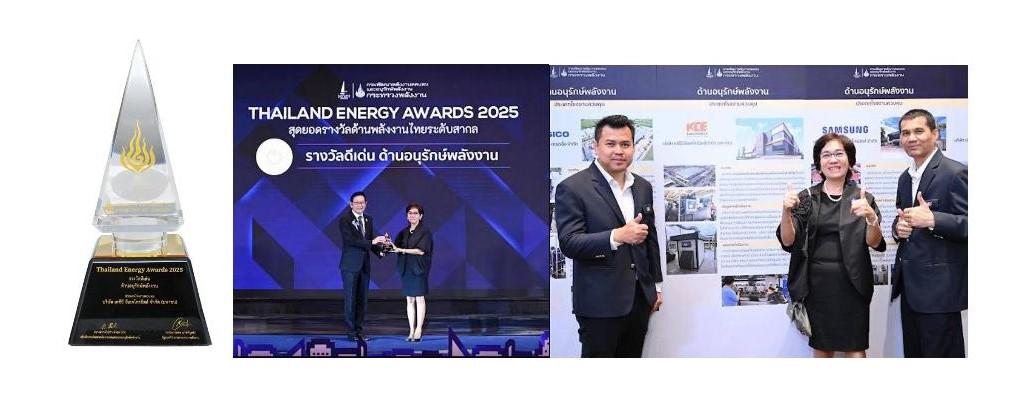
Thailand Energy Award 2025
In 2025, the Company received the Outstanding Award in Energy Conservation – Designated Factory Category at the Thailand Energy Award, organized by the Ministry of Energy. This national-level award recognizes organizations demonstrating excellence in energy management. The Company presented tangible energy conservation projects delivering measurable savings, alongside the systematic and continuous implementation of an energy management system in accordance with ISO 50001. This includes policy setting, target establishment, performance monitoring, and employee engagement, reflecting the Company’s commitment to enhancing energy efficiency, reducing costs, and supporting long-term greenhouse gas emission reduction.
Energy Management Performance
In 2025, the Company’s total energy consumption amounted to 549,098 gigajoules, comprising 92% electricity consumption and 8% fuel consumption. Electricity consumption intensity was 7.55 kilowatt-hours per square foot, representing a 6% increase compared to the 2022 base year. The primary contributing factor was the increased production proportion of high-complexity HDI printed circuit boards, which require higher energy input. In addition, the global economic slowdown resulted in production lines not operating at full capacity, while certain processes continued to require constant energy supply for cooling systems and environmental controls. Nevertheless, the Company implemented strict production management measures and scheduled partial machine shutdowns to reduce unnecessary energy consumption.
During the same year, the Company continued to implement energy efficiency improvement projects across both production processes and infrastructure systems. These included the Secondary Chiller system optimization project and improvements to the aeration system in the biological wastewater treatment (BIO) system, which reduced electricity consumption without compromising operational efficiency. Furthermore, the Company generated 4,514 megawatt-hours of electricity from its Solar Roof system, accounting for 3.2% of total electricity consumption, resulting in cost savings of approximately THB 16.6 million per year. The Company also plans to further expand renewable energy utilization in parallel with ongoing energy efficiency initiatives to support long-term greenhouse gas emission reduction.
Energy Management Projects
Energy is a critical resource for the Company’s operations. Inefficient energy consumption affects operating costs and environmental impacts. The Company has therefore established an energy management plan in alignment with ISO 50001 to continuously improve energy performance. The plan includes key measures to enhance the energy efficiency of machinery and equipment, promote the use of renewable energy, and develop energy-related knowledge, awareness, and competencies among personnel at all levels. The objective is to ensure effective energy utilization, reduce overall energy consumption, and support sustainable organizational development. The energy management plan to reduce internal energy consumption consists of three main areas, as follows:
Improving the energy efficiency of production machinery
Based on Energy Audits conducted in 2024 and 2025, the Company identified several high energy-consuming systems requiring efficiency improvements, including the Chiller system, Air Compressor system, Dust Collector system, and Wastewater Treatment system. Consequently, the Company implemented 11 key energy conservation projects to reduce energy consumption in production processes, such as:
Secondary Chiller Plant Project: Improvement of the chilled water system by optimizing chilled water flow rates to match actual load demand, and separating the Air Side and Process systems to enhance long-term overall efficiency. The project achieved electricity savings of 3,755 megawatt-hours per year, cost savings of THB 14 million per year, and greenhouse gas emission reductions of 1,559 tCO2e per year.
Dust Collector Motor & Blower Replacement Project: Upgrading the dust collection and filtration system in the drilling process by replacing the existing 45-kilowatt motor and blower, which had been in long-term operation with high energy consumption, with new high-efficiency technology equipment. The project reduced electricity consumption by 84 megawatt-hours per year, saved approximately THB 0.3 million per year in electricity costs, and reduced greenhouse gas emissions by 35 tCO2e per year.
Aeration System Improvement in Biological Wastewater Treatment Project: Replacement of the existing Root Blower with a high-efficiency Centrifugal Blower while maintaining the same airflow rate but with lower energy consumption. This improvement enhanced the efficiency of the wastewater treatment system, reduced electricity consumption by 360 megawatt-hours per year, saved approximately THB 1.3 million per year in electricity costs, and reduced greenhouse gas emissions by 149 tCO2e per year
Renewable Energy Utilization
Solar Power Generation Project (Solar Roof): The Company operates a solar power generation system with a total installed capacity of 3.5 megawatts, capable of generating approximately 4,514 megawatt-hours per year, representing 3.2% of total electricity consumption. This initiative results in electricity cost savings of approximately THB 16.6 million per year and reduces greenhouse gas emissions by approximately 1,875 tCO2e per year. In 2026, the Company plans to conduct a feasibility study for Solar Roof Phase 5 with a capacity of 400 kilowatts to further increase the proportion of renewable energy use and support long-term greenhouse gas reduction targets.
Employee Training to Promote Energy Efficiency
The Company promotes knowledge and awareness of energy conservation to support efficient energy use in alignment with the organization’s energy reduction targets. In 2025, the Company organized four energy conservation training sessions to enhance employees’ understanding of energy sources, the importance of energy to the industrial sector, future renewable energy trends, the environmental impacts of energy consumption, energy conservation practices across various systems, as well as future directions and trends in energy conservation. These initiatives aim to enable employees to apply energy-saving concepts in both their work and daily lives, and to continuously foster a corporate culture of responsible energy use.
Water Management — Overview
Introduction
The Company recognizes that water resources are a critical factor for business continuity and competitiveness amid increasing risks of water scarcity and more stringent environmental regulations. This is particularly relevant in the printed circuit board (PCB) manufacturing industry, where water is utilized in several key processes, such as rinsing, plating, and circuit board cleaning. The Company therefore places importance on systematic water management throughout its operations to control water consumption, reduce costs and environmental burdens, and appropriately assess and manage water-related risks. These efforts enhance preparedness for regulatory changes and support long-term sustainable business operations
Water — Plan & Guidelines
Has a Water Management Plan
Yes
Plan Description
Management Approach:
Efficient water use planning: Water consumption in each production process is systematically monitored to identify points of water loss and implement improvements to ensure optimal and efficient water utilization, thereby avoiding unnecessary consumption.
Water recycling systems: Treated wastewater is reintroduced into the water recycling system through Ion Exchange, Microfiltration, and Reverse Osmosis systems. This reduces reliance on municipal water supply and decreases the volume of wastewater discharged externally.
Reduction of water consumption: Technologies and process improvements are implemented to reduce the amount of water required in production processes.
Fostering a water conservation culture within the organization: Awareness of water conservation is promoted through education on the importance of efficient water use, as well as campaigns encouraging employees to participate in identifying leakage points and reporting excessive water usage, thereby collectively reducing water loss within the organization.
Appropriate wastewater treatment: A Metal Precipitation system is used to remove heavy metals and hazardous chemicals from wastewater, followed by Biological Treatment before discharging treated water back to the industrial estate system.
Compliance with standards and regulations: The Company strictly complies with applicable laws and standards related to water usage and wastewater discharge, and operates under an ISO 14001 environmental management system. Wastewater quality is regularly monitored to ensure that discharged water meets the required standards of the industrial estate system.
Water — Withdrawal, Discharge & Consumption
Water Withdrawal, Discharge & Consumption
| Metric | Current Year | Previous Year | Two Years Ago |
|---|---|---|---|
| Total water withdrawal (Cubic meters) | 2,319,506 | 2,404,520 | 2,334,287 |
| Total water withdrawal by third-party water (Cubic meters) | 2,319,506 | 2,404,520 | 2,334,287 |
| Total water withdrawal by surface water (Cubic meters) | |||
| Total water withdrawal by groundwater (Cubic meters) | |||
| Total water withdrawal by seawater (Cubic meters) | |||
| Total water withdrawal by produced water (Cubic meters) | |||
| Percentage of wastewater treated before discharge (%) | 100 | 100 | 100 |
| Total water discharge (Cubic meters) | 1,855,604 | 1,923,803 | 1,867,460 |
| Total water discharge to third-party water (Cubic meters) | 1,855,604 | 1,923,803 | 1,867,460 |
| Total water discharge to surface water (Cubic meters) | |||
| Total water discharge to groundwater (Cubic meters) | |||
| Total water discharge to seawater (Cubic meters) | |||
| Total water consumption (Cubic meters) | 463,902 | 480,717 | 466,857 |
| Recycled water (Cubic meters) | 780,690 | 868,803 | 861,777 |
Water — Targets
Has Set Targets
Yes
Targets
| Target | Base Year | Base Year Value | Target Year | Target Change (%) | Unit |
|---|---|---|---|---|---|
| Reduction of water withdrawal | 2,022 | 2,611,591 | 2,030 | 10 | Cubic meters |
Water — Performance & Outcomes
Has Performance Results
Yes
Performance Description
In 2025, the Company’s total municipal water withdrawal amounted to 2.32 million cubic meters, representing a 4% decrease compared to 2024. However, water consumption per production unit increased to 0.128 cubic meters per square foot. The primary reason was the higher production proportion of highly complex HDI printed circuit boards, which require more intensive rinsing and stricter quality control processes. In addition, the economic slowdown resulted in production operating below full capacity. Nevertheless, the Company was able to recycle water from production processes in line with its established target of 40% and maintained wastewater quality after treatment within legally prescribed standards. The Company has plans to implement additional water efficiency improvement measures in the following year, focusing on enhancing production process efficiency, expanding water recycling utilization, and continuously reducing water consumption per production unit.
Water Use Efficiency Management Plan/Projects
To address water scarcity risks and strengthen sustainable water resource management capabilities, the Company has established a systematic and prudent water management approach. The Company focuses on enhancing water use efficiency throughout its operations in accordance with the 3Rs principles (Reduce, Reuse, Recycle), alongside the development and improvement of production processes to reduce initial water consumption. In addition, wastewater treatment and water recycling technologies are applied to maximize the efficiency of water reuse within production processes. This approach contributes to reducing dependence on external water sources, enhancing operational flexibility, mitigating risks to business continuity, and supporting the Company’s long-term sustainable growth. The Company has developed the following key plans and projects:
Water Use Assessment
The Company conducts water use assessments under its Environmental Management System framework in accordance with ISO 14001 standards. Clear manuals and operational procedures have been established to systematically review, analyze, and monitor water consumption at the production process level. Particular attention is given to high water consumption processes, including copper plating, cleaning, and rinsing processes. The Company also evaluates processes that affect the quality of used water to identify opportunities for continuous improvement in water use efficiency.
Water usage is clearly categorized, covering domestic consumption, production processes such as DI water and RO water, as well as recycled and treated water. Water meters are installed in key production processes, and water consumption data are recorded and monitored on a daily and monthly basis, with comparisons made against established baselines and targets. The data are used to assess water use efficiency, monitor progress of water reduction projects, and review performance on a quarterly basis. This supports production process improvement and effective management decision-making.
Water Reduction Targets and Measures
The Company has established organizational-level water reduction targets covering its main PCB manufacturing facilities and has set sub-targets at the production process level to systematically enhance water use efficiency. Water Intensity (water consumption per production unit) is used as the primary performance indicator. The Company aims to reduce water consumption per production unit by 10% by 2030 compared to the 2022 baseline year. Performance is monitored monthly, with the Production Department responsible for implementation and the Production Engineering Department responsible for monitoring, analysis, and reporting to management. Monitoring results are used to review and improve action plans, enhance production processes, and support management decision-making to strengthen water efficiency and long-term business sustainability
In 2025, the Company continued to implement water reduction measures in production processes through workflow improvements and the adoption of water-efficient technologies, as well as controlling water usage at each stage in accordance with production requirements. The Company installed a Cascade Water System in DES, SES, and IMG production processes to improve water efficiency and reduce the need for frequent water replacement in rinse chambers during each operational cycle. Performance evaluation indicated an average reduction of 8,870 cubic meters of water per month, equivalent to 26% of previous water consumption. These improvements were implemented alongside strict production quality control to ensure that product quality standards and production consistency were maintained without adverse impacts.
Wastewater Quality Improvement Measures
The Company proactively implements systematic measures to control and improve wastewater quality, beginning with source management through the segregation of wastewater according to its characteristics, including wastewater containing heavy metals, wastewater from organic substances, and wastewater from sanitary activities. These streams are then directed to the Company’s wastewater treatment system, which consists of chemical treatment through Metal Precipitation to remove heavy metals and biological treatment processes to degrade organic substances, ensuring that effluent quality complies with legally prescribed standards.
The Company continuously monitors, measures, and controls wastewater quality. Internal wastewater quality testing and analysis are conducted daily, alongside monthly and quarterly monitoring by external agencies. Treated effluent is discharged through the industrial estate’s central wastewater treatment system. The performance of the wastewater treatment system is regularly reviewed and maintained in accordance with preventive maintenance plans. To date, the Company has no history of legal penalties related to wastewater discharge, reflecting effective wastewater management in compliance with environmental standards.
Effluent Quality
The Company continuously monitors and measures effluent quality from its wastewater treatment system. In 2025, the Company appointed Global Environmental Management Co., Ltd. (Private Laboratory Registration No. W-220), accredited under ISO/IEC 17025:2017, to conduct quarterly effluent quality testing. This is conducted in parallel with monthly monitoring by the Lat Krabang Industrial Estate authority, which collects samples for analysis in accordance with legal requirements. All test results confirmed that treated effluent quality fully complied with applicable legal standards. Throughout 2025, the Company received no community complaints and incurred no fines related to effluent quality issues.
Water Reuse and Recycling
The Company systematically implements water reuse and recycling practices from production processes by considering water quality, suitability for specific applications, and the efficiency of applied technologies. A portion of rinse water from production processes is directed to the Water Recycling system, utilizing Ion Exchange Technology to remove undesirable ions and improve water quality for reuse in production processes.
In addition, part of the wastewater that has undergone preliminary treatment is further processed through Microfiltration and Reverse Osmosis systems to remove contaminants before being reused in various systems, such as cooling systems, air pollution control systems, and sanitary systems. This approach enhances water resource efficiency, reduces dependence on external water sources, and supports sustainable water management. The Company is able to recycle up to 40% of the total water used in production processes.
In addition, part of the wastewater that has undergone preliminary treatment is further processed through Microfiltration and Reverse Osmosis systems to remove contaminants before being reused in various systems, such as cooling systems, air pollution control systems, and sanitary systems. This approach enhances water resource efficiency, reduces dependence on external water sources, and supports sustainable water management. The Company is able to recycle up to 40% of the total water used in production processes.
Employee Training and Awareness on Water Efficiency Management Program
The Company places importance on efficient and sustainable water resource management by continuously providing training and communication on Water Efficiency Management to employees. In 2025, four training sessions were conducted to enhance employees’ knowledge, understanding, and awareness of their roles in reducing water consumption in daily operations. The training covered the 3Rs principles (Reduce, Reuse, Recycle), water reduction practices in each process, appropriate water usage according to required quality standards, as well as identification of improvement opportunities and proposal of solutions to reduce water consumption within their respective operational areas.
In addition, the Company communicated practical water-saving guidelines that can be immediately applied both in the workplace and in daily life, such as turning off water when not in use, reporting water leakage, and selecting water-saving equipment. These initiatives encourage employees to actively participate in water conservation and support the development of a culture of responsible resource utilization.
Waste — Plan & Guidelines
Introduction
Amid the increasing volume of waste resulting from industrial growth, the Circular Economy concept plays a crucial role in reducing environmental impacts and strengthening competitiveness. In the printed circuit board (PCB) manufacturing industry, which involves the use of various chemicals and metals, the Company systematically manages waste throughout the entire process from source reduction, reuse and recycling, to proper disposal. These operations contribute to cost reduction, mitigation of environmental risks, and support the achievement of long-term sustainable development goals.
Has a Waste Management Plan
Yes
Plan Description
Management Approach:
Environmental management in accordance with ISO 14001:2015 standards, the Company’s environmental policy, and applicable laws and regulations.
Source reduction through improving production processes or machinery efficiency to minimize raw material losses; designing products and production processes to reduce raw material consumption; and selecting materials with lower environmental impacts.
Application of Circular Economy concepts and the 3Rs principles:
Reduce – Minimize unnecessary resource consumption and enhance production efficiency; analyze waste sources and root causes to develop waste reduction action plans
Reuse – Promote the reuse of materials or products to extend their service life.
Recycle – Encourage waste recycling to convert waste into new usable resources
Establishment of procedures for the management and disposal of different categories of waste.
Waste segregation to ensure proper treatment and disposal using appropriate and compliant methods.
Selection, audit, and monitoring of licensed and qualified waste treatment and disposal contractors authorized by government authorities.
Enhancing employee awareness regarding waste reduction, proper waste segregation, and correct disposal practices.
Waste — Generation, Disposal & Recycling
Waste Generation, Disposal & Recycling
| Metric | Current Year | Previous Year | Two Years Ago | Remark |
|---|---|---|---|---|
| Total waste generated (Kilograms) | 16,854,031 | 15,289,000 | 16,762,000 | |
| Non-hazardous waste (Kilograms) | 5,596,031 | 4,474,000 | 6,601,000 | |
| Non-hazardous waste - Landfilling (Kilograms) | 1,781,000 | 1,628,000 | 2,424,000 | |
| Non-hazardous waste - Incineration (with energy recovery) (Kilograms) | ||||
| Non-hazardous waste - Incineration (without energy recovery) (Kilograms) | 31 | 0 | 0 | |
| Non-hazardous waste - Other disposal operations (Kilograms) | 3,815,000 | 2,846,000 | 4,177,000 | Reuse Recycle |
| Hazardous waste (Kilograms) | 11,258,000 | 10,815,000 | 10,161,000 | |
| Hazardous waste - Landfilling (Kilograms) | 285,000 | 216,000 | 177,000 | |
| Hazardous waste - Incineration (with energy recovery) (Kilograms) | 743,000 | 798,000 | 844,000 | |
| Hazardous waste - Incineration (without energy recovery) (Kilograms) | ||||
| Hazardous waste - Other disposal operations (Kilograms) | 10,230,000 | 9,801,000 | 9,140,000 | Reuse Recycle |
| Total reused/recycled waste (Kilograms) | 14,044,000 | 12,647,000 | 13,317,000 | |
| Reused/Recycled non-hazardous waste (Kilograms) | 3,815,000 | 2,846,000 | 4,177,000 | |
| Reused non-hazardous waste (Kilograms) | ||||
| Recycled non-hazardous waste (Kilograms) | 3,815,000 | 2,846,000 | 4,177,000 | |
| Reused/Recycled hazardous waste (Kilograms) | 10,229,000 | 9,801,000 | 9,140,000 | |
| Reused hazardous waste (Kilograms) | 80,000 | 105,000 | 216,000 | |
| Recycled hazardous waste (Kilograms) | 10,149,000 | 9,696,000 | 8,924,000 |
Waste — Targets
Has Set Targets
Yes
Targets
| Waste Type | Disposal Approach | Target | Base Year | Base Year Value | Target Year | Target Change (%) | Unit | Unit — Please Specify |
|---|---|---|---|---|---|---|---|---|
| Non-hazardous waste | 2758 · Description: Reuse · 2759 · Description: Recycle · 2760 · Description: Landfilling · 2761 · Description: Incineration with energy recovery · 2762 · Description: Incineration without energy recovery | Reduce waste volume | 2,022 | 0.78 | 2,030 | 10 | Other | kg/ft2 |
Waste — Performance & Outcomes
Has Performance Results
Yes
Performance Description
In 2025, the Company generated a total waste volume of 16,885 tons. Of this amount, 14,045 tons, or 83%, were recovered and circulated for reuse, while 2,840 tons, or 17%, required direct disposal, with 11% disposed of through landfill. The Company remains committed to continuously reducing landfill disposal through the application of the 3Rs principles and Circular Economy concepts, as well as exploring recyclable or easily biodegradable materials to replace conventional materials.
Waste generated from production processes amounted to 0.85 kilograms per square foot, representing a 4% increase compared to the 2022 baseline year. The primary cause was the increased production proportion of highly complex HDI printed circuit boards, which require greater quantities of raw materials and auxiliary materials, as well as stricter quality control measures. Nevertheless, the Company has improved its production processes by implementing LDI and Auto Screen Printing technologies, resulting in reduced waste generation within manufacturing processes and enhanced resource efficiency across all operations. In addition, continuous employee engagement activities have been conducted to reduce office waste and promote waste segregation for recycling in place of landfill disposal.
Waste Management Projects
Waste Reduction in Production Processes through Investment in New Manufacturing Technologies
The Company has established a strategic approach to reduce waste generation at the source by focusing on waste prevention and enhancing resource efficiency in printed circuit board (PCB) manufacturing processes. Significant waste streams include hazardous chemical waste, metal and copper scrap, and production scrap. Although a formal Waste Audit has not yet been conducted, process analysis results are used to support decisions on technology upgrades and production process improvements. Operationally, the Company has invested in technology upgrades to improve precision and minimize raw material losses. Laser Direct Imaging (LDI) technology has been implemented in both Inner Layer and Outer Layer processes, resulting in a significant reduction in defect rates. In addition, the installation of LDI Exposure machines in the Solder Mask process and the implementation of Automatic Screen Printing Machines have further reduced scrap caused by production deviations, decreased the consumption of materials and chemicals, and supported operations in alignment with Circular Economy principles. These initiatives contribute to reducing environmental impacts and strengthening the Company’s long-term competitiveness.
Waste Reduction through Reuse and Recycling/Recovery
Waste generated from the Company’s operations that can be reused or recovered accounts for 83% of total waste. The Company integrates recycling and resource recovery practices into its operations to reduce the volume of waste sent to landfill or disposal. Waste is segregated and transferred to legally authorized waste management contractors. For example, waste containing valuable metals such as scrap containing copper and gold, or used chemical solutions containing copper is sent for recovery processes to extract metals for reuse. This approach enhances resource value and reduces environmental impacts.
In 2025, the Company implemented a project to improve waste recovery efficiency by changing the disposal method for used filters from incineration to segregation and sale for precious metal recovery. The results showed that a total of 86,630 kilograms of used filters were generated, of which 42,668 kilograms were sold for metal recovery, generating revenue of Baht 128,000 and reducing waste disposal costs by Baht 170,600
Paper Reduction through Work Process Improvement
Paper consumption in operational processes contributes to the use of natural resources and waste generation. The Company has therefore implemented process improvement initiatives by applying digital technologies to reduce paper usage, enhance operational efficiency, and support the development of employees’ digital skills. In 2025, the Company implemented key paper reduction projects as follows:
Traveller Sheet Paper Reduction Project
The Company improved its workflow by reducing detailed production specifications in the traveller sheet for each production lot to include only essential production steps and necessary information. Production specifications are now accessed via tablets provided to employees for operational use and production data recording. As a result, paper usage was reduced by 63%, equivalent to approximately 320 reams, decreasing paper waste by 720 kilograms and generating savings of Baht 67,200 in paper and printing costs. In addition, the initiative promotes digital operations and enhances employees’ technological capabilities within production processes.
Work Instruction Digitization Project
The Company transitioned from paper-based work instructions to digital access via tablets. This change reduced the use of 983 printed manuals, equivalent to 32,300 sheets of paper per year, resulting in annual savings of approximately Baht 9,000 in paper and printing or photocopying expenses. The initiative also reduces the administrative burden related to document printing, distribution, and storage, while minimizing the risk of using outdated document versions.
Training and Awareness Building on Waste Reduction for Employees
The Company places importance on enhancing employees’ knowledge, understanding, and awareness regarding waste reduction in production processes. Annual training on waste reduction is provided to employees involved in production to promote understanding of their roles and responsibilities in minimizing waste, reducing scrap, and lowering overall waste generation across the organization.
Training Program: Handling & 5S to Reduce Product Scratches
The Company conducted Handling & 5S training programs for employees from supervisory to operational levels, totaling 5 batches. The training aimed to improve skills in material handling, storage, and systematic operations. As a result, employees achieved higher standards of correct working practices, reduced the risk of product scratches, and minimized scrap generated from production processes, thereby enhancing overall product quality and production efficiency.
Training Program: Waste Management and Proper Waste Segregation
The Company strengthened employees’ knowledge and understanding of waste management and proper waste segregation. A total of 4 training batches were conducted by internal trainer from the Environmental Working Committee, complemented by awareness signage in operational areas. This enabled employees to correctly identify waste categories and select appropriate management methods, resulting in more accurate waste segregation, reduced contamination risks, improved recycling efficiency, and support for overall waste reduction across the organization.
Campaign Activities on Efficient Resource Utilization and Waste Segregation
The Company organized campaigns promoting efficient resource utilization and waste segregation during the 2025 Safety and Environment Week. Participatory communication formats were applied, including educational boards, waste segregation games, and keychain crafting from plastic bottle caps. These activities aimed to enhance employee understanding and awareness, enabling practical application in daily operations and supporting the development of an organizational culture that prioritizes waste reduction and sustainable environmental management.
Participation in Waste Management Projects with External Organizations
“Ting To Trash” Waste Segregation Project
The Company received an award under the “Ting To Trash” waste segregation project from the Office of the Securities and Exchange Commission (SEC), in collaboration with the Thai Listed Companies Association and Kid Kid Co., Ltd. This achievement reflects the Company’s commitment to conducting business in accordance with sustainable development principles, with emphasis on minimizing environmental impacts and fostering an organizational culture focused on waste reduction at the source, aiming to minimize waste generation or achieve zero waste.
Integrated Waste Management Project “Lat Krabang Mai The Ruam”
A subsidiary, Thai Laminate Manufacturer Co., Ltd. (TLM), encouraged employee participation in waste segregation and recyclable waste collection by joining the integrated waste management project “Lat Krabang Mai The Ruam.” The project was organized by the Committee for Participation-Driven Development of Lat Krabang District, the Lat Krabang District Office, King Mongkut’s Institute of Technology Ladkrabang (KMITL), and Wastebuy Delivery Co., Ltd.
Waste Segregation and Recycling Pha Pa Initiative
In support of the integrated waste management project “Lat Krabang Mai The Ruam,” Thai Laminate Manufacturer Co., Ltd. (TLM) donated segregated recyclable waste through the “Waste Segregation and Recycling Pha Pa” initiative (a Buddhist merit-making activity) at Wat Thong, Charan Sanitwong Road 46, Bangkok, via Wastebuy Delivery Co., Ltd. In 2025, a total of 2,194 kilograms of recyclable waste from the canteen and office areas were collected and donated. This activity forms part of the Company’s waste management and corporate social responsibility initiatives.
Greenhouse Gas — Overview
Introduction
Climate change is a critical global issue that significantly impacts the environment and livelihoods worldwide. Countries around the world recognize the urgent need for collective action, including Thailand, which has set a target to achieve Net-Zero greenhouse gas emissions by 2050. In addition, the Company has received requirements from customers to participate in reducing greenhouse gas emissions in alignment with their decarbonization targets. Accordingly, the Company places great importance on responding to climate change by implementing measures to reduce greenhouse gas emissions from its business operations. These measures include improving production efficiency, developing innovations and technologies to enhance manufacturing processes, increasing the use of renewable energy, promoting supplier engagement, and encouraging employees to adopt responsible energy and resource consumption behaviors.
GHG — Plan & Guidelines
Has a GHG Management Plan
Yes
Plan Description
Management Approach
Establish greenhouse gas management policies and targets, and appoint a Greenhouse Gas Management Working Team.
Assess climate-related risks and opportunities that may impact the Company’s operations and define mitigation measures to address climate change risks.
Measure and verify greenhouse gas emissions in accordance with internationally recognized standards, including the GHG Protocol, ISO 14064, and ISO 14067.
Develop a Decarbonization Plan aligned with the Company’s greenhouse gas reduction targets and continuously review and refine plans and strategies to ensure consistency with the organizational context.
Promote research and development to identify new technologies or methods that contribute to reducing greenhouse gas emissions in production processes.
Raise awareness and provide employee training on energy management and greenhouse gas reduction.
Engage stakeholders, particularly suppliers, to reduce greenhouse gas emissions throughout the value chain.
Governance of Greenhouse Gas Management
The Company places importance on governance of greenhouse gas (GHG) management at all levels. This is overseen by the Corporate Governance and Sustainability Committee in conjunction with the Enterprise Risk Management Committee. Greenhouse gas management is regularly included as an agenda item in Board of Directors’ meetings at least three times per year.
At the management level, the Company has appointed the Sustainability Management Committee and the Risk Management Committee, comprising senior executives from all relevant functions. In addition, a dedicated Greenhouse Gas Management Working Team has been established to drive planning and monitor performance in alignment with the Company’s targets and strategic direction.
Decarbonization Plan
The Company has established a greenhouse gas (GHG) reduction strategy covering Scope 1, Scope 2, and Scope 3 emissions to support the transition toward a low-carbon economy by 2030. The Company prioritizes the reduction of emissions from its own operations (Scope 1 and Scope 2) as the first priority, as these are areas that can be directly controlled and managed. The Company has set a target to reduce Scope 1 and Scope 2 GHG emissions by 30% by 2030, compared to the 2022 base year.
For Scope 3 emissions, which cover the entire value chain, the Company focuses on collaborative actions with suppliers and external stakeholders. This approach reflects the Company’s role as an influencer rather than a direct controller of such emissions to ensure clarity, transparency, and alignment with international reporting standards.
GHG — Emissions
GHG Emissions
| Metric | Current Year | Previous Year | Two Years Ago | Remark |
|---|---|---|---|---|
| Total GHG emissions (Metric tonnes of carbon dioxide equivalent) | 156,834 | 180,476 | 66,691 | |
| Total greenhouse gas emissions 1 (Metric tonnes of carbon dioxide equivalent) | 3,204 | 2,997 | 2,466 | |
| Total greenhouse gas emissions 2 (Metric tonnes of carbon dioxide equivalent) | 56,131 | 62,183 | 64,225 | |
| Total greenhouse gas emissions 3 (Metric tonnes of carbon dioxide equivalent) | 97,499 | 115,296 | 0 | 1. The initial collection of Scope 3 greenhouse gas (GHG) emissions data collection in 2024. Following a significance assessment, Categories 1, 3, 5, and 9 were identified as material and prioritized for reporting. 2. In 2025, Scope 3 Category 9 was reassessed and determined to be non-material following the reclassification of data categories in accordance with the definitions prescribed by the Thailand Greenhouse Gas Management Organization (TGO). |
GHG — Emissions Verification
Introduction
GHG emissions data for Scope 1, Scope 2, and Scope 3 were prepared in accordance with ISO 14064-1:2018 and the Greenhouse Gas Protocol, and were verified by an independent third party, SGS (Thailand) Limited, for the reporting period from 1 January to 31 December 2025 (Certificate No. TH-BA-25-39884-01), to ensure the accuracy, transparency, and reliability of the disclosed information.
Emissions Verified by a Third Party
Yes
Verifying Body
2656
Verifying Body — Please Specify
SGS (Thailand) Co., Ltd.
GHG — Principles & Standards
Principles & Standards Applied
| Standard |
|---|
| 2671 |
| 2672 |
| 2676 |
| 2677 |
GHG — Targets
Has Set GHG Targets
Yes
GHG Targets — Net Zero
Net Zero Targets
| Emission Scope | SBTi Status | TGO Certification | Base Year | Base Year Emissions | Near-term Target Year | Near-term Target Change (%) | Long-term Target Year | Long-term Target Change (%) | Target Year | Target Change (%) | Unit |
|---|---|---|---|---|---|---|---|---|---|---|---|
| 2715 | Commit | Net zero pathway | 2,022 | 73,066 | 2,030 | 30 | 2,050 | 100 | 2,030 | 30 | Metric tonnes of carbon dioxide equivalent |
GHG — Performance & Outcomes
Has Performance Results
Yes
Performance Description
In 2025, the Company reported total greenhouse gas (GHG) emissions under Scope 1 and Scope 2 of 59,326 tons of carbon dioxide equivalent (tCO2e), representing a reduction of 18.8% compared with the 2022 base year (73,066 tCO2e) and an 8% decrease compared with 2024. This comprised 3,204 tCO2e from Scope 1 and 56,131 tCO2e from Scope 2. The reduction was attributable to efficient production management in conjunction with the continuous implementation of energy efficiency improvement projects, resulting in a total GHG emissions reduction of 5,166 tCO2e. This achievement represents more than two-thirds of the Company’s 2030 target.
For Scope 3 (other indirect emissions), the Company reported total emissions of 97,499 tCO2e, accounting for 62% of total emissions across all three scopes. The primary source of emissions was purchased raw materials, amounting to 75,245 tCO2e or 47% of total emissions. The Company has therefore initiated engagement programs with key suppliers to encourage the calculation and disclosure of both Corporate Carbon Footprint (CFO) and Product Carbon Footprint (CFP), with the objective of strengthening greenhouse gas management throughout the value chain.
Greenhouse Gas Reduction Strategy for Organizational Operations (Scope 1 and Scope 2)
Enhancing Energy Efficiency and Reducing Operational Greenhouse Gas Emissions
The Company continuously improves energy efficiency in its production processes and operations, covering both electricity consumption and direct fuel use. This is achieved through machinery upgrades, energy control systems, production management optimization, and the adoption of high-efficiency technologies to reduce energy intensity per unit of production and lower overall operational greenhouse gas emissions.
In 2025, the Company implemented a Secondary Chiller Plant installation project, which reduced electricity consumption by 2,816 megawatt-hours, resulting in electricity cost savings of THB 10.5 million and a reduction of 1,170 tCO2e in greenhouse gas emissions. Further details are provided in Section 3.3 Energy Management.
Increasing the Proportion of Renewable Energy Use
The Company has continuously increased the proportion of electricity sourced from renewable energy to reduce reliance on fossil fuels and support its greenhouse gas reduction targets. This initiative began with the installation of on-site solar power generation systems (Solar Cells) within the factory premises. Currently, the Company operates Solar Cell systems with a total installed capacity of 3.5 megawatts, generating 4,514 megawatt-hours of electricity per year. This results in annual electricity cost savings of THB 16.6 million and a reduction of approximately 1,875 tCO2e per year.
In addition, the Company is studying the feasibility of procuring electricity from external renewable energy sources (e.g., renewable energy power purchase agreements). The Company closely monitors government policies, support measures, and regulatory developments to ensure proper, transparent, and compliant implementation in alignment with future regulatory frameworks.
Developing Innovation and Technology to Improve Resource Efficiency and Responsible Waste Management
The Company promotes the development and adoption of technologies and innovations to enhance production processes, improve resource efficiency, and reduce production losses. This includes reducing energy, water, and chemical consumption, as well as recycling and reusing process water where appropriate to minimize freshwater withdrawal and reduce environmental impacts.
In 2025, the Company installed an Auto Screen Printing machine for the Solder Mask process. This measure improves product quality, reduces production costs, enhances energy and material efficiency, and supports long-term greenhouse gas reduction targets.
Greenhouse Gas Reduction Strategy across the Value Chain (Scope 3)
Sustainable Supply Chain Management and Promotion of Carbon-Conscious Procurement
The Company places strong emphasis on reducing greenhouse gas emissions throughout its supply chain by encouraging suppliers to report their greenhouse gas emissions data, establishing environmental criteria for supplier selection, and promoting collaboration to reduce emissions from raw materials and transportation processes.
In 2025, the Company initiated a supplier engagement program to encourage key suppliers to prepare and disclose carbon footprint information at both the organizational level (Corporate Carbon Footprint: CFO) and product level (Product Carbon Footprint: CFP), aiming to enhance greenhouse gas management across the value chain. A greenhouse gas reporting survey was distributed to 76 raw material suppliers. The response rate was 38%, and 28% of suppliers reported their greenhouse gas emissions data. Further details are provided in Section 2.4 Supply Chain Management.
Promoting the Use of Recycled Materials in Place of Virgin Materials in Production Processes
The Company promotes the use of recycled materials in place of virgin materials in its production processes, in compliance with customer product specifications and quality requirements. This approach aims to reduce the use of new natural resources and lower greenhouse gas emissions within the supply chain.
In 2025, recycled copper accounted for 23% of the total weight of key raw materials used. The Company plans to further increase the proportion of recycled materials, particularly metals and plastics, to continuously reduce Scope 3 greenhouse gas emissions associated with raw material consumption. Further details are provided in Section 3.6 Product Responsibility.
Supporting Used Material and Waste Management through Collaboration with External Operators
The Company prioritizes the proper management of used materials and production waste in accordance with circular economy principles. Used materials and waste with recovery potential such as metal-containing chemical solutions and PCB scrap are transferred to qualified and legally authorized external operators for recycling and precious metal recovery processes. The recovered materials are subsequently reused as raw materials or incorporated into products in other industries.
In 2025, a total of 23,412 tons of used materials and production waste were sent for recycling, representing 84% of the total waste generated. Further details are provided in Section 3.5 Waste Management.
Responsible Use of Carbon Offsetting Mechanisms as a Complementary Measure
The Company will consider the use of carbon offset mechanisms from credible and verifiable projects, selecting projects certified under internationally recognized standards such as Gold Standard or Verra (VCS), or projects certified under Thailand’s Voluntary Emission Reduction Program (T-VER). The use of such mechanisms will be implemented as a complementary measure, following priority actions to reduce greenhouse gas emissions from the Company’s own operations and value chain.
Raising Awareness and Promoting Employee Engagement in Greenhouse Gas Reduction
The Company promotes knowledge and awareness of climate change and greenhouse gas reduction to support the achievement of its climate-related goals. In 2025, the Company organized four training sessions on greenhouse gases and the Carbon Footprint of Organization (CFO), conducted by internal ESG personnel. The training covered Scope 1, 2, and 3 emissions, methodologies for calculating the Carbon Footprint of Organization (CFO), the impacts of climate change on business operations, customer requirements, the Company’s greenhouse gas reduction targets and plans, as well as practical approaches to reducing emissions in both workplace operations and daily life.
In addition, the Company organized activities during Safety Week, including knowledge booths, Q&A activities, and a Carbon Footprint game to encourage employee participation and continuously strengthen an environmentally responsible organizational culture.
Product Carbon Footprint (PCF)
The Company places importance on managing greenhouse gas emissions at the product level by conducting Product Carbon Footprint (PCF) assessments to support the development of environmentally responsible products and to meet the expectations of customers, investors, and sustainability assessors.
The Company conducts PCF assessments under a cradle-to-gate boundary, covering raw material sourcing, in-house manufacturing processes, and associated energy consumption. The assessments are based on internationally recognized principles and methodologies in accordance with ISO 14067 to ensure accuracy, transparency, and verifiability.
Currently, the Company has completed the calculation and verification of Product Carbon Footprints and obtained certification from the Thailand Greenhouse Gas Management Organization (Public Organization). Certified products include one High-Density Interconnection Printed Circuit Board, 6 layers (HDI PCB 6 layers), and one product each of Laminate and Prepreg key raw materials used in PCB manufacturing from its subsidiary (TLM). The Company has further developed its experience and methodology into an internal PCF calculation program applicable to all Company products. This program enables systematic and consistent preparation of product carbon footprint data and facilitates accurate and timely disclosure to customers in accordance with individual customer product specifications and design requirements.
The Company utilizes PCF assessment results as a tool to analyze emission sources, support production process improvements, enhance energy efficiency, and collaborate with customers and suppliers to continuously reduce greenhouse gas emissions throughout the value chain.
Environmental Legal Incidents
Number of Incidents — Introduction
The Company places strong emphasis on compliance with environmental laws and regulations. Relevant laws, regulations, and requirements are systematically compiled and strictly implemented. Legal compliance assessments are conducted four times per year to ensure ongoing conformity. In addition to regulatory compliance, the Company actively minimizes environmental impacts and controls pollution across multiple aspects, including air emissions, wastewater, lighting, noise, heat, and radiation. Environmental monitoring is conducted in accordance with the annual environmental monitoring plan, covering ambient air quality, workplace conditions, and wastewater quality.
In 2025, the Company received no environmental complaints, and all environmental monitoring results were within the legal regulatory standards.
Legal Violation Incidents
| Metric | Current Year | Previous Year | Two Years Ago |
|---|---|---|---|
| Number of cases or incidents of legal violations or negative environmental impact (cases) | 0 | 0 | 0 |
Employee Management — Overview
Introduction
The Company recognizes that employees are its most valuable resource and a key factor in business success. Fair labor practices aligned with international labor and human rights standards therefore form the foundation of sustainable operations. The Company is committed to providing a safe and health-supportive working environment, while promoting diversity and equal inclusion, non-discrimination, appropriate compensation and working hours, social protection systems, support for employees’ freedom of association, and work–life balance. The Company also continuously develops employees’ capabilities to ensure they are well prepared to perform effectively and to jointly drive the organization’s sustainable growth, in line with the increasing expectations of stakeholders regarding the role of responsible business organizations.
Employees — Plan & Guidelines
Has an Employee Management Plan
Yes
Plan Description
Fair Labor Practices
The Company conducts its business in compliance with labor laws and human rights principles at all levels, including international labor standards of the International Labour Organization (ILO) and the principles under the UN Guiding Principles on Business and Human Rights. The Company has established clear labor and human resource management policies and practices and communicates them to employees at all levels. A fair remuneration structure is implemented in accordance with industry standards and legal requirements, primarily based on performance and competency. This is accompanied by the promotion of diversity and non-discrimination in all aspects to ensure equal opportunities for all employees to grow. In addition, the Company supports continuous skills development, covering both professional competencies and knowledge of labor rights, and provides mechanisms for receiving employee feedback and grievances, with appropriate and effective corrective and preventive actions.
Labor Management System
The Company has adopted a labor management system in accordance with the Thai Labor Standard (TLS 8001:2563) for its labor operations and has been certified by an accredited external auditor, Global Certification Service Co., Ltd. The certification scope covers the operations of the Company and its subsidiary, KCE Technology Co., Ltd. The system is subject to continuous annual audits and covers 90% of total employees. For subsidiaries that have not yet obtained TLS 8001 certification, the Company applies the principles and guidelines of the standard in their operations, together with regular monitoring and follow-up by internal auditors to enhance and align labor management practices consistently across the Group.
Measures to Prevent Discrimination and Harassment
The Company places importance on respecting human rights, equality, and the dignity of all employees, aiming to create a safe and fair working environment free from all forms of discrimination and harassment. A clear policy prohibiting discrimination and harassment has been established, covering verbal, physical, and electronic conduct. Recruitment, performance evaluation, and promotion processes are based on knowledge, capability, and performance. The Company supports equal pay for work of equal value, provides secure and confidential grievance channels with transparent and fair investigation processes, and regularly monitors and reviews gender data, remuneration, and promotion practices to prevent and mitigate long-term discrimination risks.
Living Wage
The Company recognizes the importance of providing a living wage that covers the basic needs of employees and their families, such as food, housing, healthcare, transportation, and education, excluding overtime pay and bonuses. This differs from the statutory minimum wage, which may not reflect actual living costs in each locality. Currently, the Company determines wages with reference to legal requirements, internal salary structures, and cost-of-living data in Bangkok and its vicinity to ensure appropriateness and fairness, with regular reviews in line with economic conditions and inflation. The Company is in the process of developing a systematic living wage assessment to inform future wage policy and sustainably enhance employees’ quality of life.
Working Hours
The Company emphasizes appropriate management of working hours to avoid excessive overtime or prolonged working hours that may affect employees’ health and quality of life. Working hours and overtime are established in compliance with applicable labor laws and on a voluntary basis, with employee consent and fair overtime compensation. Workforce planning and production planning are conducted systematically, and working hours are continuously monitored to limit reliance on overtime while balancing operational efficiency and employee well-being.
Communication and Consultation with Employee Representatives
The Company has established an Employee Committee elected in accordance with legal requirements to represent employees in conveying opinions, suggestions, and needs to management for consideration and improvement of working conditions and welfare. Employer representatives meet with the Employee Committee at least once per quarter. The outcomes, resolutions, and action plans of the meetings are communicated to employees through appropriate internal communication channels. Upon approval by the Chief Executive Officer and Managing Director, resolutions and proposals of the Employee Committee become effective and apply to all employees.
Equal Remuneration
The Company regularly reviews its human resource management practices to promote diversity, eliminate gender bias, and ensure equal opportunities in recruitment, skill development, career progression, and remuneration. The remuneration policy aligns with industry standards and labor laws and adheres to the principle of equal pay for work of equal value, based on roles and responsibilities, performance, and competency, without discrimination. The Company annually monitors, analyzes, and reviews gender pay differences and uses the findings to improve remuneration policies and practices to strengthen fairness and talent retention.
Employee Benefits
The Company invests in human capital and provides long-term stability for permanent employees by offering benefits beyond legal minimum requirements to support quality of life, financial security, and talent retention. These benefits cover all factories in Thailand, which are considered significant operational sites. Benefits for permanent employees include life insurance covering health, accident, and disability protection; a provident fund to promote retirement savings; and an Employee Joint Investment Program (EJIP) to encourage employee participation in ownership, as well as parental leave in accordance with legal requirements.
Employee Performance Evaluation
The Company conducts performance evaluations based on Management by Objectives (MBO), setting annual Key Performance Indicators (KPIs) according to each position and monitoring results monthly. Employees can review their performance scores through the Intranet system to ensure transparency. If performance falls below target, individual development plans are implemented through discussion and additional coaching. A mechanism is also available for employees to request KPI reviews through designated channels. Annual evaluations are conducted for consideration of remuneration and bonuses, covering 100% of employees at all levels. Plant KPIs incorporate ESG and safety indicators to promote accountability and organizational sustainability.
Promotion of Diversity and Equality
The Company promotes diversity and equality by implementing equal employment policies free from discrimination based on gender, race, nationality, religion, color, origin, disability, political opinion, trade union membership, or any other status. The Company respects labor rights and treats employees fairly in accordance with Thai labor laws and international standards, ensuring equality in all human resource management processes, including recruitment, performance evaluation, promotion, career development, remuneration, working hours, leave, benefits, and the provision of a safe and appropriate working environment.
Equal Opportunities for Persons with Disabilities
The Company promotes equal and fair employment opportunities by providing job opportunities for persons with disabilities in positions and roles appropriate to their physical condition and capabilities to support inclusive participation in the labor market. Appropriate and safe workplace facilities are provided, including restrooms, ramps, elevators, and parking spaces, to facilitate work performance and daily activities.
Employee Development
The Company recognizes employee capability development as a key driver in enhancing competitiveness and sustainable growth in the PCB business. Human resource development is integrated under a systematic management framework, including policy and development planning, competency management, training needs analysis, annual training plans, and performance monitoring and evaluation to ensure that human capital investment aligns with corporate strategy and risk management. Continuous training is provided both internally and externally, including e-learning, to enhance professional and leadership skills. This is supported by KPI evaluation, career development planning, skill development for production employees, and the promotion of a learning culture and business ethics to sustain long-term performance and sustainability.
Occupational Health and Safety
The Company prioritizes occupational health and safety for employees and stakeholders, striving to become a Zero Accident Organization. A management system aligned with legal requirements and ISO 45001 standards has been implemented, supported by a clearly defined occupational health and safety policy. Risk assessments are conducted across all work processes, with hazard control measures established and continuously improved. The Company provides training and promotes a safety culture, establishes channels for reporting accidents and suggestions, investigates and analyzes root causes to prevent recurrence, and ensures effective emergency management, drills, and preparedness of equipment and personnel to continuously and sustainably enhance safety standards.
Plan Areas
| Plan Area | Other — Please Specify |
|---|---|
| Fair employee compensation | |
| Employee training and development | |
| Promoting employee relations and participation | |
| Child labor | |
| Occupational health and safety in workplace | |
| Others | Non-discrimination |
Employees — Workforce
Workforce Data
| Metric | Current Year | Previous Year | Two Years Ago |
|---|---|---|---|
| Total number of employees (Persons) | 4,171 | 4,643 | 5,027 |
| Number of male employees (Persons) | 2,358 | 2,533 | 2,759 |
| Number of female employees (Persons) | 1,813 | 2,110 | 2,268 |
| Total employment of disabled persons (people) | 25 | 26 | 22 |
| Total disabled employees (people) | 25 | 26 | 22 |
| Total male disabled employees (people) | 17 | 18 | 14 |
| Total female disabled employees (people) | 8 | 8 | 8 |
| Total disabled workers who are non-employee (people) | |||
| Contributions to the fund for promoting and improving the quality of life for disabled persons | 0 | 0 | 0 |
| Total number of male employees in operational level (Persons) | 2,272 | 2,450 | 2,675 |
| Total number of male employees in management level (Persons) | 67 | 65 | 73 |
| Total number of male employees in executive level (Persons) | 19 | 18 | 11 |
| Total number of female employees in operational level (Persons) | 1,745 | 2,047 | 2,205 |
| Total number of female employees in management level (Persons) | 60 | 54 | 57 |
| Total number of female employees in executive level (Persons) | 8 | 9 | 6 |
Employees — Remuneration & Provident Fund
Remuneration & Provident Fund
| Metric | Current Year | Previous Year | Two Years Ago |
|---|---|---|---|
| Total disabled employees (people) | 2,311,651,875 | 2,343,646,071 | 2,393,276,000 |
| Total male employee remuneration (Baht) | 1,277,303,461 | 1,376,186,248 | 1,237,104,019 |
| Total female employee remuneration (Baht) | 1,034,348,414 | 967,459,823 | 1,156,171,981 |
| Number of employees eligible to participate in PVD (persons) | 2,366 | 2,478 | 2,170 |
| Total number of employees joining employee provident fund (Persons) | 1,436 | 1,273 | 1,262 |
| Percentage of total number of employees joining employee provident fund to total number of employees (%) | 34.43 | 27.42 | 25.1 |
| Number of PVD members / Total eligible employees (%) | 60.69 | 51.37 | 58.16 |
| Total amount of provident fund contributed by the Company (Baht) | 39,154,457.66 | 39,535,069.35 | 41,655,002.22 |
| Total amount of provident fund contributed by employee (baht) | 43,498,733.16 | 44,163,660.39 | 44,835,038.2 |
Employees — Training & Development
Introduction
The Company recognizes the development of human capital as a key factor in strengthening competitiveness and achieving sustainable growth in the printed circuit board (PCB) industry. The Company is committed to enhancing the skills, knowledge, and competencies of employees at all levels to align with technological advancements, industry changes, and evolving sustainability expectations.
Employee capability development is systematically integrated within the organization’s governance framework and human resource management processes, covering policy formulation, competency management, training needs analysis, annual training roadmap development, as well as monitoring and evaluation of outcomes. This ensures that investments in human capital development concretely support corporate strategy, risk management, and long-term value creation.
Management Approach:
Establish systematic human resource development policies and plans covering employees at all levels, aligned with corporate strategy, risk management, and long-term value creation.
Implement competency management using frameworks of Core Competency, Leadership Competency, and Functional Competency to assess potential, plan career development, and support appropriate individual development.
Conduct continuous training and development through internal and external training programs, e-learning systems, online learning platforms, seminars, workshops, and special programs to enhance both hard skills and soft skills.
Perform Training Needs Analysis and develop an Annual Training Roadmap to ensure personnel development aligns with operational requirements and changes in technology, digital transformation, and specialized functions.
Emphasize leadership development and career progression planning (Career Development and Succession Planning) to prepare high-potential employees and support succession readiness, particularly at the executive level.
Regularly evaluate employee performance using position-appropriate Key Performance Indicators (KPIs), combined with constructive feedback and coaching to promote continuous capability development.
Develop the competencies of production operators to ensure sufficient knowledge and capability to perform duties in accordance with company standards and quality policies.
Foster an organizational culture that promotes learning, knowledge management, and the cultivation of corporate values, culture, and business ethics to support efficient and sustainable operations.
Training Data
| Metric | Current Year | Previous Year | Two Years Ago |
|---|---|---|---|
| Average employee training hours (Hours / Person / Year) | 27 | 29 | 21 |
| Employee development and training expenses (baht) | 2,435,200 | 2,442,272 | 2,854,055 |
Employees — Occupational Health & Safety
Introduction
The Company places importance on occupational health and safety for both employees and stakeholders, with a commitment to becoming a Zero Accident Organization. The Company has therefore established an occupational health and safety management system in compliance with national laws and international standards. Risks are regularly assessed and reviewed, and safety systems and control measures are continuously improved and enhanced.
Management Approach:
Establishing an Occupational Health and Safety Policy in alignment with the requirements of the ISO 45001 Occupational Health and Safety Management System, as well as applicable laws and customer requirements
Risk assessment and hazard control through analysis and evaluation of risks in each work process, implementation of hazard control measures, and establishment of monitoring systems with continuous improvement of preventive measures.
Training and promotion of a safety culture by providing occupational health and safety training to employees, fostering safety awareness and health consciousness, and establishing channels for employees to report incidents and propose corrective actions.
Compliance with occupational health and safety laws and international standards, including the ISO 45001 Occupational Health and Safety Management System.
Regular safety inspections and performance evaluations, analysis of accident root causes, implementation of corrective and preventive actions to avoid recurrence, and continuous improvement of management practices based on evaluation results.
Emergency management, including conducting emergency drills, providing first aid equipment, and training designated personnel to deliver assistance effectively.
Occupational Health & Safety Data
| Metric | Current Year | Previous Year | Two Years Ago |
|---|---|---|---|
| Total number of lost time injury incidents by employees (Cases) | 24 | 19 | 11 |
Employees — Labour Relations
Introduction
The Company recognizes that employees are a key resource in driving sustainable growth in the printed circuit board manufacturing industry, which requires expertise and collaboration. The Company therefore places importance on fostering employee engagement at all levels by promoting a safe and fair working environment that supports learning and career advancement, while providing opportunities for employees to express their views and continuously improve work processes. Such engagement forms a critical foundation for enhancing operational efficiency, product quality, and the Company’s long-term competitiveness.
Management Approach:
Establishing and implementing relevant policies, including the Human Resource Management and Development Policy, Human Rights Policy, Occupational Health and Safety Policy, and corporate values, as a framework for systematic employee care.
Promoting an organizational culture that encourages participation, satisfaction, and respect for diversity in race, culture, and opinions.
Enhancing employees’ skills and capabilities through continuous training and learning to support career progression and build confidence in their roles.
Providing fair and competitive compensation, benefits, and reward systems aligned with industry standards, including recognition of outstanding performance.
Encouraging open and transparent communication between management and employees, along with organizing activities to strengthen workplace relationships.
Providing opportunities for employees to express opinions and participate in organizational improvement through various mechanisms, such as the Welfare Committee, Employee Committee, and Safety Committee.
Supporting internal career progression pathways and regularly assessing employee engagement levels to inform ongoing development and improvement plans.
Labour Relations Data
| Metric | Current Year | Previous Year | Two Years Ago | Remark |
|---|---|---|---|---|
| Total voluntary resignations (Persons) | 247 | 270 | 272 | |
| Male employees who voluntary resigned (Persons) | 126 | 162 | 163 | |
| Female employees who voluntary resigned (Persons) | 121 | 108 | 109 | |
| Percentage of employee turnover leaving the Company voluntarily (%) | 10.2 | 11.6 | 11 | |
| Evaluation result of employee engagement | 1 | 1 | 1 | In 2025, the Company conducted an employee engagement survey covering 2,179 employees, comprising 49% female and 51% male employees. The assessment covered nine dimensions: job characteristics, social aspects, job security, workplace and management, job instruction, communication, compensation and benefits, working conditions, and career advancement opportunities. The results indicated an overall employee engagement level of 75.3%, classified as “High,” achieving the target set for 2024–2025 of 75%. Based on the survey analysis, employees reported the highest satisfaction in job characteristics, while career advancement opportunities received lower-than-target scores. The Company has incorporated the survey findings into continuous human resource improvement plans and has set a target to increase employee engagement to 78% for 2026–2027. Concurrently, the Company aims to maintain the voluntary turnover rate of permanent employees at no more than 12% to strengthen workforce continuity, enhance productivity, and support sustainable organizational performance. |
Employees — Employee Representation
Introduction
The Company conducts its business with responsibility toward labor and human rights, in alignment with the principles of the International Labour Organization (ILO) and Thai labor laws. The Company recognizes that freedom of association and the right to collective bargaining are fundamental rights that promote sound labor relations and organizational sustainability. The Company respects employees’ rights to establish or join groups, employee representatives, employee committees, or labor unions on a voluntary basis without obstruction or interference, and protects them from retaliation or any form of harassment. Employees are free to join or not join third-party organizations in accordance with the law.
The Company promotes good-faith, transparent, and constructive communication and negotiation between management and employee representatives, including legally recognized labor union representatives. Mechanisms include the Welfare Committee, employee representative meetings, and collective bargaining negotiations regarding employment conditions, compensation, and benefits. Confidential grievance channels are available under a non-retaliation principle. The Company continuously develops its labor communication processes to ensure equal access to rights for all employee groups. Currently, 100% of permanent employees are covered under a Collective Bargaining Agreement (CBA), reflecting labor stability and strong cooperation within the organization.
Employees Are Represented Collectively
Yes
Forms of Representation
| Form |
|---|
| Employee committee |
| Labor union |
| Welfare committee |
Employees — Targets
Has Set Employee Targets
Yes
Targets
| Indicator | Target Areas | Target Year | Target Year — Description |
|---|---|---|---|
| 1.1 Proportion of female executives to total executives 1.2 Number of complaints related to discrimination and harassment | 2989 · Description: Non-discrimination | 2,025 | 1.1 Not less than 30%
1.2 Zero complaints |
| Average training hours per employee | 2984 · Description: Employee training and development | 2,025 | Not less than 24 hours per person per year |
| 3.1 Employee engagement level 3.2 Voluntary turnover rate of permanent employees | 2985 · Description: Promoting employee relations and participation | 2,025 | 3.1 Not less than 75%
3.2 Not exceeding 12% per year |
| Lost Time Injury Frequency Rate (LTIFR) of employees resulting in more than 3 days of lost time | 2988 · Description: Safety and occupational health at work | 2,025 | 0 cases per 1,000,000 working hours |
Employees — Performance & Outcomes
Has Performance Results
Yes
Performance Description
Labor Relations Awards
Honor Award for Outstanding Establishment in Labor Relations and Welfare at the national level for 2025, received consecutively for the 13th year
Outstanding Healthy Organization Award: Excellence Level in Promoting Healthy Lifestyles in Four Dimensions for 2025
Moral Learning Center Award for the Private Business Sector for 2025, recognizing the Company as a moral learning center in the private sector
Labor Practices
In 2025, the Group employed a total of 4,171 employees, comprising 56% permanent employees and 44% subcontracted employees. The workforce consisted of 43% female and 57% male employees. The Company transparently discloses gender diversity data and has set a target of having more than 30% female executives among total executives. Currently, female executives account for 43%, reflecting progress in achieving gender balance.
In revenue-generating functions, including Production and Sales, female executives represent 28%. The Company aims to enhance women’s career advancement opportunities through technical and leadership skill development. Female employees account for 44% of employees in STEM-related roles within this group. In the same year, female employees represented 35% of new hires and 45% of total promotions, demonstrating the Company’s continued ability to attract and develop female talent. No complaints related to discrimination or harassment were reported during the year.
Employee Development
In 2025, training programs were conducted to enhance essential knowledge and skills for employees at all levels, with an average of 27 training hours per employee per year. Both executive-level and operational-level employees achieved an average of more than 24 training hours in line with the target. The training plan for senior executives will be further improved, including increasing online training or e-Learning programs. Additional sustainability-related training courses will also be incorporated to equip employees with knowledge to further align operations with sustainable development objectives.
Employee Engagement and Participation
In 2025, the employee engagement survey score was 75.3%, rated at a “High” level and meeting the target of 75%. Employees reported the highest satisfaction in relation to job characteristics, while career advancement opportunities scored below target. The Company has used the survey results to develop and implement continuous improvement plans to enhance employee experience and growth opportunities.
In the same year, the voluntary turnover rate was 10.2%, decreasing from the previous year and below the target of 12%. The Company analyzed the causes of turnover and applied the findings to continuously improve retention and incentive measures.
Occupational Health and Safety
In 2025, the Company did not achieve its Zero Lost Time Injury target. There were 24 cases of work-related injuries resulting in more than three days of lost time, resulting in a Lost Time Injury Frequency Rate (LTIFR) of 2.02 per 1,000,000 working hours. No serious accidents or fatalities were reported.
The primary types of injuries were cuts from sharp objects and contusions from impact, mainly associated with machine operations, material handling, and unsafe behaviors. To address these issues, the Company has planned for 2026 to implement machine hazard analysis projects, develop task-specific safety standards and manuals, conduct training and knowledge assessments, review the use of personal protective equipment (PPE), and strengthen supervision. Clear safety KPIs will be established and continuously monitored, alongside promoting employee participation to enhance safety culture and reduce workplace accidents in the future.
Customer Management — Overview
Introduction
The Company places importance on sustainable customer relationship management and is committed to building customer satisfaction while developing and maintaining long-term relationships. This is achieved through the production of quality products and the delivery of excellent services, guided by the Quality Policy: “Deliver products and services to meet or exceed agreed requirements, continuously improve quality, and do it right the first time.” The Company conducts business with integrity and builds customer confidence in safeguarding customer business information under good corporate governance and the Business Code of Conduct, alongside effective risk management and responsible environmental and social operations.
Customers — Plan & Guidelines
Has a Customer Management Plan
Yes
Plan Description
Management Approach:
Sustainable customer relationship management is implemented through the following practices:
Continuously drive innovation and research and development to deliver high-value, high-quality products and services that meet diverse customer needs
Develop environmentally friendly products and services by focusing on reduced resource consumption, energy efficiency, and extended product life cycles.
Ensure that products and services are safe, non-hazardous to consumer health, reliable, and supported by accurate and sufficient information for customers.
Systematically and securely store customer data and ensure that such data is not misused.
Establish fair pricing for products and services.
Assign responsible units to provide product recommendations, consultation, problem resolution, and complaint handling to maximize customer satisfaction.
Implement management systems in accordance with international standards
Plan Areas
| Plan Area |
|---|
| Responsible production and services for customers |
| Communication of product and service impacts to customers/consumers |
| Development of customer satisfaction and customer relationship |
| Protection of customer personal information |
Customers — Satisfaction Results
Customer Satisfaction Results
| Metric | Current Year | Previous Year | Two Years Ago |
|---|---|---|---|
| Evaluation results of customer satisfaction | 1 | 1 | 1 |
Customers — Targets
Has Set Customer Targets
Yes
Targets
| Indicator | Target Areas | Target Year | Target Year — Description |
|---|---|---|---|
| Customer satisfaction assessment score | 3009 · Description: Development of customer satisfaction and customer relationship | 2,025 | Not less than 90% |
| Number of customer confidential data leakage incidents | 3010 · Description: Consumer data privacy and protection | 2,025 | Zero customer confidential data leakage incidents |
Customers — Performance & Outcomes
Has Performance Results
Yes
Performance Description
Performance:
Customer Satisfaction Assessment Score (Customer Scorecard)
Customers provide the Company with a satisfaction assessment scorecard, evaluating performance across five dimensions: Delivery, Quality, Technical Expertise, Customer Responsiveness, and Competitiveness. These evaluations reflect the level of customer satisfaction toward the Company. In 2025, a total of 24 customers submitted satisfaction assessment results. The Company achieved an average customer satisfaction score of 91%
Customer Satisfaction Improvement Plan
Enhancing customer satisfaction is a key priority for the Company in delivering excellent service and achieving the highest level of customer satisfaction. The Company has established the following guidelines for improving customer satisfaction:
Understand customer needs and expectations
Establish clear customer satisfaction targets by defining measurable indicators
Develop effective communication channels with customers
Regularly measure and evaluate customer satisfaction
Utilize assessment results to continuously improve product and service quality
Enhance employees’ skills and understanding of customer service
Customer Audit
VDA 6.3 is a process audit standard applied in the automotive industry, particularly among manufacturers associated with the German automotive industry. The assessment covers three main areas: Manufacturing Processes, Supplier Management, and Customer Care/Service. In 2025, a total of 7 automotive customers conducted VDA 6.3 audits at the Company. The Company achieved an average VDA 6.3 audit score of 90%, receiving a Grade “A” (High Potential). This rating indicates that the Company passed the assessment at a high level, demonstrates strong process capability, and maintains a very low level of process risk. No short-term follow-up audit was required.
Nevertheless, the Company implemented corrective actions to address the identified findings and formally responded to customers upon completion.
Community & Social — Overview
Introduction
The Company recognizes that sustainable business growth is closely linked to the well-being of communities and society. The Company therefore conducts its business alongside sustainable community development through collaboration with relevant stakeholders and active employee participation to strengthen community capacity, reduce inequality, and support long-term growth. The Company places emphasis on expanding educational and career opportunities while implementing projects that address the diverse needs of target groups. It also promotes volunteerism and responsibility toward society and the environment. The Company’s community development strategy is aligned with the Sustainable Development Goals (SDGs) and is supported by continuous annual budget allocation.
Community & Social — Plan & Guidelines
Has a Community & Social Plan
Yes
Plan Description
Management Approach:
Establishing a Community and Social Responsibility Policy aligned with the Sustainable Development Goals (SDGs)
Building partnerships with the public sector, private sector, and civil society to effectively implement projects.
Conducting surveys and interviews to gather opinions, concerns, and needs of surrounding communities, and utilizing the information to develop community development plans or projects aligned with the capabilities of both the organization and the community, while providing opportunities for community participation in evaluation processes.
Promoting stakeholder communication and engagement in defining community and social development approaches to ensure sustainability, and utilizing multiple communication channels to disclose project outcomes and build public trust.
Monitoring implementation progress and continuously improving initiatives.
Encouraging participation through volunteer activities and ongoing collaboration with communities.
Community and Social Development Plan
The Company’s community and social development plan focuses on fostering continuous engagement with communities surrounding its factories and society at large through the implementation of corporate social responsibility initiatives. These include projects initiated by the Company and those carried out in collaboration with external organizations. The Company places importance on listening to community feedback and assessing community needs through regular dialogue sessions and site visits conducted annually. The information gathered is used to design and develop projects aligned with the needs and expectations of communities and society, thereby creating shared value, strengthening positive relationships, and promoting sustainable and mutually beneficial coexistence. The plan comprises 6 key projects.
Child and Youth Development Project
Health and Quality of Life Projects
Support for Vulnerable Groups and Disaster Relief Projects
Livelihood and Economic Empowerment Project
Environmental Stewardship Project
Religious and Cultural Promotion Initiatives
Plan Areas
| Plan Area |
|---|
| Employment and professional skill development |
| Education |
| Religion and culture |
| Forests and natural resources |
| Sports and recreation |
| Occupational health, safety, health, and quality of life |
| Disadvantaged and vulnerable groups |
| Reducing inequality and promoting social equality |
Community & Social — Targets
Has Set Community & Social Targets
Yes
Targets
| Indicator | Target Areas | Target Year | Target Year — Description |
|---|---|---|---|
| Number of child and youth development projects. | 3037 · Description: Education | 2,025 | Number of child and youth development projects: at least three projects |
Community & Social — Performance & Outcomes
Has Performance Results
Yes
Performance Description
Community and Social Development Projects in 2025
Child and Youth Development Project
The Company upholds and protects children’s rights in accordance with the Children’s Rights and Business Principles (CRBP), recognizing that education is a fundamental foundation for the sustainable development of children and youth. The Company is committed to promoting equitable and appropriate access to educational opportunities through initiatives that enhance learning, skill development, and the potential of children and youth. These efforts aim to equip them with the readiness to thrive and become key contributors to society in the future.
Green Society Project
The Company has continuously implemented the “Solar Cell for Green Community” project for the fourth consecutive year. In 2025, the Company supported the installation of a solar-powered lighting system at Wat Tippawas School, Lam Pla Thio Subdistrict, Lat Krabang District, Bangkok, a school located in the community surrounding the factory. The project enhanced lighting at the sports dome area and internal school roads used for teaching and student activities. Solar lighting fixtures were installed at the sports dome and along school roads, contributing to improved safety, reduced accident risks, energy savings, lower electricity expenses, and the promotion of sustainable renewable energy use.
Project Satisfaction Evaluation Result: 100%
Green Energy for Education Project
In 2025, the Company continued the “Green Energy for Education” project for the fourth consecutive year at Phra Dabos School, Samut Prakan Province, under the Phra Dabos Foundation established under the Royal Initiative of His Majesty King Bhumibol Adulyadej (Rama IX). The Foundation plays a significant role in providing educational and vocational opportunities for underprivileged individuals. The Company supported the use of clean energy alongside the enhancement of learning quality through the installation of a 10-kilowatt Solar Rooftop system on the school’s multipurpose building. The system generates approximately 16,000 kWh of electricity per year, reducing electricity expenses by around THB 65,000 annually and lowering greenhouse gas emissions by approximately 7–8 tons of carbon dioxide equivalent per year. Beyond energy savings, the system also serves as a learning resource on renewable energy and innovation, enhancing students’ knowledge and skills while laying a foundation for sustainable development in clean energy education and human resources.
Project Satisfaction Evaluation Result: 100%
“One Classroom, One Opportunity Towards a Digital Society” Project
The Company implemented this project to promote access to information technology and computers, which are essential tools for youth learning and skill development. The Company donated computer sets to Wat Bueng Bua School, Lat Krabang District, Bangkok, a school located in the community surrounding the factory. The support benefited students in Grades 4–6, with a total of 150 students and teachers. This initiative enhanced teaching and learning effectiveness, expanded access to information technology, and contributed tangibly to reducing educational inequality.
Project Satisfaction Evaluation Result: 100%
Scholarship Program: The Company supports educational opportunities for employees’ children and youth in surrounding communities. In 2025, a total of 166 scholarships were granted to employees’ children, amounting to THB 450,000, to alleviate financial burdens and enhance morale. In addition, scholarships and educational supplies were provided to 12 schools located near the Company’s factories and 2 schools in remote areas in Phitsanulok and Chiang Rai provinces, to promote continuous and sustainable access to education.
Dual Vocational Training and Cooperative Education Internship Program: The Company promotes student capability development and strengthens collaboration between educational institutions and enterprises through integrated learning programs that combine classroom theory with practical workplace training. This approach enhances professional skills, work discipline, and readiness for the labor market. In 2025, the Company and its subsidiaries hosted a total of 26 interns, comprising 14 higher vocational certificate students and 12 undergraduate students, with a total investment of THB 2,748,284
Open House for Learning Program: The Company welcomed 33 faculty members and students from the Faculty of Applied Science at King Mongkut’s University of Technology North Bangkok for a study visit to observe the PCB production process and wastewater treatment system. The initiative supported experiential learning outside the classroom and provided students with direct exposure to real industrial operations, in alignment with coursework in electronics technology and circuit board assembly.
Health and Quality of Life Projects
Charity and Health Running Activities: The Company promotes community and employee health by participating in charity running events. These included the “Healthy City Lat Krabang Run,” organized by Nakarapibal Hospital to raise awareness of health and non-communicable disease prevention, and the “Run with Heart, Together – Hi-Tech 6th Edition” event to raise funds for medical equipment for Bang Pa-In Hospital. A total of 52 employees participated in these activities.
KCE Blood Donation Every 3 Months” Project: The Company promotes a spirit of volunteerism and social contribution by providing opportunities for executives and employees of the Company and its subsidiaries to participate in blood donation activities every three months. The initiative supports blood reserves for hospitals and medical institutions, benefiting patients and society as a whole. In 2025, executives and employees donated a total of 171,000 cc of blood.
Support for Vulnerable Groups and Disaster Relief Projects
Support for Vulnerable Groups: The Company provided assistance to elderly persons, bedridden patients, and persons with disabilities in seven surrounding communities, covering a total of 70 households, through the distribution of essential consumer goods. The Company also supported wheelchair donations through the “Be the Arms and Legs for Grandparents” project of the Mirror Foundation, donated items to support the rehabilitation of children with disabilities at Camillian Home for Children with Disabilities, Lat Krabang District, and donated unused computer equipment to the Association of the Physically Handicapped (International) for recycling to generate income in support of sustainable quality-of-life development for persons with disabilities.
Disaster Relief Assistance: The Company contributed to flood relief efforts in areas surrounding Ban Wa Industrial Estate, Phra Nakhon Si Ayutthaya Province, and in southern Thailand. Assistance included cash donations, ready-to-eat food, essential supplies, and medicines, delivered through the Ban Wa Industrial Estate Office, Lat Krabang Industrial Estate Office, and the Thai Airways donation center.
Livelihood and Economic Empowerment Project
Community Market Project: Organized at the end of each month, this initiative promotes positive relationships between the Company, employees, and surrounding communities. The Company provides space within the factory for community members and small entrepreneurs to sell consumer goods, food, and local products to employees. The project generates income for communities, reduces employee expenses, and supports the local grassroots economy. Six communities participate in the initiative.
Environmental Stewardship Project: The Company implemented the “Plant to Reduce for a Sustainable Future: Let’s ZERO Together” project by planting trees within the Lat Krabang Industrial Estate to increase green areas and reduce greenhouse gas emissions. This was carried out alongside the promotion of a circular economy through a water hyacinth upcycling project to produce compost and cushioning materials, aiming to reduce the use of foam and plastics. The project has been continuously implemented in collaboration with local agencies since 2016 to deliver sustainable environmental outcomes.
Religious and Cultural Promotion Initiatives: The Company organized tree candlelight procession activities on important Buddhist holy days to reduce pollution from incense and candles while increasing green space. The Company also supported charitable food distribution activities during the Kathin ceremony at Wat Phra That Sop Saed in Lampang Province, with participation from executives and employees, to preserve religion and culture and strengthen positive relationships with the community.
Law Violation Incidents
Law Violation Incidents
| Metric | Current Year | Previous Year | Two Years Ago | Remark |
|---|---|---|---|---|
| The total number of cases or incidents of significant violations of laws or regulations regarding social and human rights (Cases) | 3 | 0 | 0 | |
| The total number of cases or incidents that cause significant labor disputes (Cases) | 2 | 0 | 0 | The Company recorded two labor-related cases, which involved disciplinary misconduct and were under the mediation process. The Company assessed that these cases did not have any significant impact on its operations. |
| The total number of cases or complaints related to consumer rights violations (Cases) | ||||
| The total number of cases or complaints related to partner rights violations (Cases) | ||||
| The total number of cases or incidents that cause disputes with the community/society (Cases) | 1 | 0 | 0 | The Company received one community complaint concerning smoke emitted from the ventilation stack. Upon investigation, no severe health impacts were identified. The Company has completed corrective actions and implemented necessary improvements accordingly. |
| The total number of cases or incidents related to cyber security or customer data breaches (Cases) | ||||
| The total number of cases or incidents related to safety and occupational health at work (Cases) |
Law Violations — Case Detail & Corrective Measures
Incidents & Corrective Measures
| Year | Incident Detail | Status | Remediation Measures | Non-financial Impact |
|---|---|---|---|---|
| 2,025 | Labor dispute relating to employee disciplinary misconduct. | Remediation plans being implemented | To provide training for employees and supervisors to reinforce their understanding of workplace rules and regulations. | No impact on the Company’s operations |
| 2,025 | Community dispute relating to a complaint regarding smoke emissions from the ventilation stack causing eye irritation. | Incident no longer subject to action | Implemented corrective actions and enhanced the efficiency of the air treatment control system. | No severe health impacts were identified. |